

BIS Certification for Fire Detection & Alarm Systems in India: IS 2189, IS/ISO 7240 & the 2025 QCO
Few products carry as direct a life-safety responsibility as a fire detection and alarm system. When a fire starts, the difference between a controlled evacuation and a tragedy can come down to whether a smoke detector triggers in time and whether the alarm actually sounds. Because these systems protect lives in homes, offices, factories, hospitals, and public buildings, India is bringing fire detection and alarm products firmly under mandatory BIS certification.
For manufacturers and importers of detectors, control panels, and alarm devices, this marks a significant shift toward verified, standardised quality. This guide explains the standards that govern fire detection and alarm systems, the move toward mandatory certification under the 2025 Quality Control Order, what is covered, and how to obtain certification.
1. The Move to Mandatory Certification
Historically, India’s fire alarm industry operated primarily under IS 2189 — a code of practice first established decades ago and last revised in 2008 — without comprehensive mandatory product certification. That is changing. India’s adoption of the IS/ISO 7240 series as its national fire-alarm product standard, combined with the Fire Detection and Alarm Systems (Quality Control) Order, 2025, brings mandatory BIS certification to fire safety products. Once enforced, covered products cannot be manufactured, imported, or sold without a valid BIS licence and the Standard Mark.
2. The Applicable Standards
Fire detection and alarm compliance draws on a family of standards, and it is important to distinguish the system code of practice from the product standards:
| Standard | Scope |
|---|---|
| IS 2189 | Code of practice for selection, installation and maintenance of automatic fire detection and alarm systems |
| IS/ISO 7240 (series) | Product standards for fire detection and alarm system components — India’s modern national framework |
| IS 11360 | Specification for smoke detectors for use in automatic electrical fire alarm systems |
IS 2189 governs how a system is designed, installed, and maintained, while the IS/ISO 7240 series and standards such as IS 11360 govern the products themselves. The shift toward IS/ISO 7240 also reflects the industry’s move to support modern technologies, including wireless fire alarm systems, and aligns India’s product requirements with international practice.
3. What Is Covered
A fire detection and alarm system is made up of several distinct product types, and certification applies at the component level. Typical covered products include:
- Smoke detectors (covered by IS 11360 and the IS/ISO 7240 framework).
- Heat detectors and other automatic fire detectors.
- Fire alarm control panels.
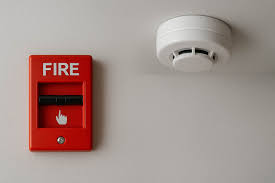
- Manual call points (break-glass units).
- Sounders, alarm devices, and other notified components.
Manufacturers and importers should map every component in their range against the applicable standard, since a complete system is only as compliant as its individual certified parts.
4. The Certification Route
Fire detection and alarm products are certified under the BIS framework with the Standard Mark. The broad process mirrors other product certifications:
- Determine the standards — Identify the correct Indian Standard for each product — detector, panel, call point, sounder.
- Apply — Apply on the BIS portal with the required technical and business documents.
- Testing and assessment — The product is tested at a BIS-recognised laboratory against the applicable standard; the manufacturing facility is assessed as required.
- Address queries — Respond promptly to any BIS queries during review.
- Grant of licence — On a successful assessment, BIS grants the licence authorising use of the Standard Mark.
5. Foreign Manufacturers
Overseas manufacturers of fire detection products certify through the Foreign Manufacturers Certification Scheme (FMCS): they appoint an Authorised Indian Representative (AIR) resident in India and undergo a BIS assessment of the overseas facility where required. As with all foreign-manufacturer routes, this adds time and coordination, so importers should plan certification well ahead of the enforcement date and their intended supply schedule.
6. Documents, Timeline, and Validity
Typical documentation includes the manufacturing licence or business registration, production-process and testing details, technical specifications for each product, trademark or brand authorisation, and — for foreign applicants — the AIR appointment. Timelines depend on testing queues and documentation readiness; foreign applications run longer due to overseas assessment scheduling. The licence is granted for a defined term and is renewable, subject to continued compliance and surveillance.
7. Why Standardisation Is Transforming the Industry
The shift to mandatory certification under IS/ISO 7240 is more than a procedural change — it is reshaping the fire-safety market in India. For years, the absence of comprehensive product certification meant that detectors and panels of widely varying quality circulated in the market, and buyers had limited means to tell a reliable product from a poor one. Standardisation closes that gap: it gives building owners, consultants, and contractors a clear, verifiable benchmark, and it pushes sub-standard products out of a sector where reliability is literally a matter of life and death.
The move also supports modern system design. The IS/ISO 7240 framework accommodates newer technologies such as addressable and wireless systems, which makes it easier to deploy fire detection in heritage buildings, large complexes, and retrofits where wiring is difficult. For manufacturers, aligning with the new standard is not just a compliance task — it is a chance to bring better, more capable products to a market that increasingly demands them.
8. Common Pitfalls
Fire-product certification tends to stall on the same recurring issues:
- Standard confusion — Confusing the IS 2189 code of practice with the product standards (IS/ISO 7240, IS 11360) that actually govern certification of the device.
- Partial coverage — Certifying some components but assuming the whole system is covered, when each device needs its own certification.
- Specification mismatches — Specifications in the technical file that do not match the tested sample.
- Late foreign filings — Foreign applicants leaving AIR appointment and overseas assessment scheduling too late.
9. Penalties and Why It Matters
Selling uncertified fire detection or alarm products once the QCO is enforced exposes a business to penalties under the BIS Act, 2016 — fines, imprisonment, and seizure of stock — and imported consignments can be detained at customs. But for life-safety products, the stakes go beyond regulatory penalties. A detector that fails to trigger or an alarm that does not sound can cost lives, and the legal and reputational consequences of supplying a defective life-safety product are severe. Certification is, in the end, both a legal requirement and an ethical one — and for serious manufacturers, a way to stand apart in a market where trust is everything.
10. Maintaining Compliance Over the System’s Life
For fire detection products, compliance does not end at the moment a licence is granted — and nor does responsibility. BIS conducts periodic surveillance to confirm that products continue to meet the standard, and the licence must be renewed before expiry to keep the Standard Mark valid. But the deeper point is that a fire system’s value lies entirely in its reliability years after installation, when it finally has to perform. That places a premium on consistent manufacturing quality, traceable components, and a quality system that genuinely holds up between audits. Manufacturers who view certification as the start of an ongoing commitment — rather than a one-time gate — are the ones whose products earn the trust of consultants, contractors, and building owners over the long term. In a sector where a single failure can be fatal, that reputation for dependable, certified quality is the most valuable asset a fire-safety brand can build.
Frequently Asked Questions
Q. What is the difference between IS 2189 and IS/ISO 7240?
IS 2189 is a code of practice for how fire detection and alarm systems are selected, installed, and maintained. The IS/ISO 7240 series provides product standards for the components themselves — India’s modern national framework for fire-alarm products.
Q. Which standard covers smoke detectors?
Smoke detectors are covered by IS 11360 (specification for smoke detectors for automatic electrical fire alarm systems), within the broader IS/ISO 7240 framework.
Q. Does certification apply to each component or the whole system?
Certification applies at the product level — detectors, control panels, call points, and sounders each need to meet their applicable standard. A compliant system is built from individually certified components.
How PCN India Global Can Help
Our specialists manage the full certification lifecycle — standard selection, lab-test coordination, factory-audit readiness, AIR appointment, documentation, and end-to-end filing — so your approval clears the first time. Call +91 80109 05029, email bdm@pcnindiaglobal.com, or visit pcnindiaglobal.com to get started.