
BEE Star Rating & Registration for Commercial Beverage Coolers in India: Annual Energy Consumption and the Complete Star Label Process
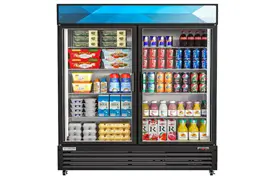
Walk into any grocery store, convenience shop, restaurant, or petrol-pump kiosk in India and you will see them: glass-fronted coolers stocked with chilled soft drinks, juices, water, and dairy. These commercial beverage coolers — often called visi coolers — run around the clock, every day of the year, frequently in hot ambient conditions and with doors opened hundreds of times a day. That relentless duty makes them significant electricity consumers, which is why the Bureau of Energy Efficiency (BEE) brought them into its mandatory Standards & Labelling programme. For any manufacturer or importer of beverage coolers, a valid BEE Star Label and registration is now a precondition for the Indian market.
Commercial beverage coolers are covered under a dedicated BEE schedule (commonly referenced as Schedule 37, notified in 2024) and sit in the mandatory column. The star rating is based on Annual Energy Consumption, giving beverage companies, retailers, and cooler manufacturers a clear, comparable measure of running cost. This guide explains why certification is mandatory, how the rating works, the step-by-step registration process, the documents required, realistic timelines and costs, and the mistakes that most often cause delays.
Why BEE Certification Is Mandatory for Beverage Coolers
BEE Star Labelling operates under the Energy Conservation Act, 2001, administered by the Bureau of Energy Efficiency under the Ministry of Power. Commercial beverage coolers fall in the mandatory labelling category, which means a covered cooler must carry a valid BEE registration and an affixed star label before it can be manufactured, imported, displayed, or sold in India.
The mandatory status has real teeth. Organisations manufacturing beverage coolers must adhere to the BEE standards to market their products in India, and firms importing coolers must ensure conformity before selling. Non-compliant products can face the standard consequences — seizure, penalties under the Energy Conservation Act, and removal from sale. The commercial reality reinforces this: the large beverage brands that deploy coolers by the tens of thousands to retail outlets are highly cost- and ESG-conscious, and they increasingly specify energy-efficient, star-rated coolers in their procurement. For a cooler manufacturer, the star label is both a legal permit and a bidding requirement for the biggest contracts in the category.
Annual Energy Consumption: The Metric Behind the Stars
The star rating for a commercial beverage cooler is based on its Annual Energy Consumption (AEC) — the total electricity, in kilowatt-hours per year, that the cooler consumes under standardised test conditions. Because these coolers run continuously, AEC is a direct proxy for the running cost the end user will actually pay. The rating principle is straightforward: the cooler is rated from one to five stars based on its AEC against the labelling criteria in the standard, with lower annual consumption earning a higher star rating.
To qualify for a star label at all, the cooler must meet the minimum labelling criteria specified; models that cannot meet the entry threshold cannot be labelled and, in a mandatory category, cannot be sold. This structure deliberately squeezes the least efficient products out of the market while giving efficient manufacturers a visible advantage. Because AEC depends on the cooler’s insulation, compressor, fan, lighting, door design, and control strategy, the measured test figure — not a nominal power rating — determines the star. Two coolers of similar size and price can post materially different AEC values, which is precisely the information the label exists to reveal.
Why Efficiency Matters at Deployment Scale
The economics of beverage coolers are unusual because a single beverage company may operate a fleet of tens or hundreds of thousands of identical units across the country, and it typically pays — directly or indirectly — for the electricity they consume at retail outlets. At that scale, the difference between a low-rated and a high-rated cooler is not a rounding error; it is a recurring, fleet-wide cost that compounds every year the units stay in service. This is why large brands now write minimum star ratings into their cooler tenders and audit the energy performance of what they deploy.
For the cooler manufacturer, that dynamic turns the BEE star from a compliance formality into a decisive commercial specification: the higher-rated, properly registered product is the one that wins the volume contract. Designing coolers with efficient compressors, good door sealing, LED lighting, and smart defrost and lighting controls is therefore both an energy strategy and a sales strategy.
Step-by-Step: How to Get a BEE Star Label for a Beverage Cooler
Our team manages each stage end to end, but every applicant should understand the sequence.
- Confirm applicability and criteria. Establish that the model falls within the commercial-beverage-cooler schedule and confirm the AEC labelling criteria and star bands in force.
- Test at a BEE-recognised / NABL-accredited laboratory. Submit sample coolers for energy testing to establish the Annual Energy Consumption under the standardised conditions. This report is the basis of the star assignment.
- Register the company and brand on the BEE portal. Create the manufacturer / importer account on the official BEE (beestarlabel) portal and obtain your company and brand identifiers, reused across all models.
- Register each model. File the model-level application with the technical specification sheet, the test report, the AEC data, and the required declarations. Each model needs its own registration and its own test evidence.
- Star assignment and label generation. BEE maps the AEC to the applicable star band and generates the official label showing the star rating, energy consumption, and validity period.
- Affix the label and sell. Print and affix the approved BEE label, in the prescribed format, on every unit before display or sale.
- Renew periodically. Labels are valid for a limited period and must be renewed, with updated test data where criteria have changed.
Documents Required for BEE Certification of Beverage Coolers
A complete file at the outset is the biggest single lever on approval speed. You will typically need:
For testing and the model application
- Product technical specification sheet (capacity/volume, refrigerant, compressor, door configuration, lighting)
- Model name and full product description exactly as it will appear on the unit
- Physical product samples for the laboratory
- Valid test report from a NABL-accredited / BEE-recognised laboratory establishing AEC
- Label draft / artwork in the prescribed BEE format
- Signed model declaration / declaration of conformity
For company and brand registration
- Certificate of Incorporation (MCA/ROC)
- GST registration certificate
- PAN card of the company
- Trademark / brand authorisation documents
- Address proof of the company and manufacturing facility details
- Authorised signatory details, and Board Resolution / Power of Attorney
- Import Export Code (IEC) — for importers
- Brand authorisation letter — where an importer represents an overseas brand
Foreign manufacturers cannot register directly on the BEE portal unless they have an Indian-registered entity; overseas brands must appoint an authorised Indian representative or work through their Indian importer.
Timeline and Cost Planning
A realistic first-model schedule runs roughly five to ten weeks end to end. Energy testing to establish AEC is usually the longest single element, commonly two to four weeks depending on the lab queue and the number of models. Document preparation and company/brand registration can run in parallel and add one to two weeks, and portal processing generally takes a further two to four weeks. Where a manufacturer registers a range built on shared refrigeration platforms across capacities, test evidence and documentation leverage well across models, so the per-model effort falls after the first registrations. Given the mandatory status, the priority is to complete testing and registration before placing product on the market rather than risking a compliance gap.
Common Mistakes That Delay Beverage Cooler Registration
- Relying on nominal power instead of AEC. The star depends on measured Annual Energy Consumption under standard conditions, not a spec-sheet wattage.
- Failing the entry threshold. A model that cannot meet the minimum labelling criteria cannot be labelled or, in a mandatory category, sold — design to clear the threshold with margin.
- Model-name drift. The designation on the report, portal, label, and unit must match exactly.
- Importer/entity mismatch. For imports, the BEE registration holder, the IEC holder, and the importer of record should be aligned.
- Skipping renewal. A lapsed label makes every deployed unit non-compliant.
Beverage Coolers Often Need These Approvals Too
BEE labelling rarely travels alone:
- BIS certification — safety compliance under the applicable Indian Standard; see our BIS ISI certification service.
- EPR for e-waste — producers and importers of electrical and electronic equipment must hold EPR registration for e-waste with CPCB.
- Legal Metrology (LMPC) — imported pre-packaged products require LMPC registration and correct package declarations.
- WPC ETA — smart / connected coolers with Wi-Fi or Bluetooth telemetry need WPC ETA approval for their radios.
Managed together on overlapping timelines, these approvals keep deployment on schedule.
Pre-Deployment Compliance Checklist for Beverage Coolers
Before committing to a production run or booking an import consignment, run this verification sequence. First, confirm the exact model designation that will appear on the unit, the test report, the BEE label, and (for imports) the bill of entry is identical down to every suffix. Second, verify that the laboratory established AEC under the standardised conditions and that the value maps to your intended star rating. Third, check that the label artwork uses the prescribed BEE format and shows the correct star count and energy consumption. Fourth, confirm the company/brand registration is live and, for imports, that the registration holder and importer of record are aligned. Fifth, ensure parallel approvals — BIS, EPR, LMPC, and WPC where applicable — are progressing on the same timeline.
For ongoing operations, maintain a compliance register per model: BEE registration and validity, AEC and star band, test report reference, and refrigeration platform — so large deployment orders can be fulfilled with confidence and renewals never lapse.
Frequently Asked Questions
Is BEE certification mandatory for commercial beverage coolers?
Yes. Commercial beverage coolers are in the mandatory column of the BEE Standards & Labelling programme. A covered cooler must carry a valid registration and star label before it can be manufactured, imported, or sold in India.
What decides the star rating?
Annual Energy Consumption (AEC) — the total kWh per year the cooler uses under standardised test conditions. Lower AEC earns a higher star rating, and a model must meet the minimum labelling criteria to be labelled at all.
Does nominal power set the rating?
No. The star depends on measured AEC, not the spec-sheet wattage. Two similar coolers can rate differently based on insulation, compressor, and design.
Do I need a separate registration for each model?
Yes. Every model requires its own test report and registration, though the company and brand registration is done once and covers all models under the brand.
Can a foreign manufacturer register directly?
No. Overseas brands need an Indian-registered entity or must appoint an authorised Indian representative / work through their Indian importer.
Does the label need renewal?
Yes. Labels are valid for a limited period and must be renewed, with updated test data where criteria have changed.
Why Choose PCN India Global
- Category expertise — we map every cooler model to the correct schedule and current AEC criteria before testing begins
- Threshold-aware design guidance — we help ensure models clear the minimum labelling criteria with margin
- Accredited lab coordination — AEC testing that produces reliable data the first time
- End-to-end portal handling — company, brand, and model registration filed, tracked, and driven to label generation
- Foreign-brand representation — we act as your authorised Indian representative where you have no Indian entity
- One integrated timeline — BEE sequenced with BIS, EPR, LMPC, and WPC so your deployment schedule holds
PCN India Global manages the complete BEE Star Label process for commercial beverage coolers — from AEC testing to portal filing, label generation, and renewal. Contact us: WhatsApp +91 80109 05029, email bdm@pcnindiaglobal.com, or start your application today.