
Importing Products to India: Every Approval, Certification & Licence You Need
India is one of the world’s most dynamic import markets — but it is also one of the most regulated. Every year, thousands of shipments are held at Indian ports because the importer was unaware of a mandatory certification, failed to register under an EPR scheme, or imported without a valid LMPC licence. This guide lists the approvals needed for importing products to India, from BIS and WPC to EPR and LMPC.
If you are a foreign manufacturer, an Indian importer, a brand owner, or an e-commerce business planning to bring products into India, this guide is for you. It explains — in plain language — every regulatory approval you may need before your products can legally be imported, cleared through customs, and sold in the Indian market.
Understanding the full picture of importing products to India approvals upfront saves enormous time, cost, and compliance risk later.
Table of Contents
- Why India’s Import Compliance Framework Is Different
- Step 1: Import Export Code (IEC) — Your Import Identity
- Step 2: BIS Certification — For Regulated Product Categories
- Step 3: LMPC Registration — Mandatory for Pre-Packaged Goods
- Step 4: EPR Registration — For Waste-Linked Products
- Step 5: WPC ETA Approval — For Wireless & RF Devices
- Step 6: TEC / MTCTE Approval — For Telecom Equipment
- Step 7: BEE Registration — For Energy-Intensive Products
- Step 8: DGFT Import Licence — For Restricted Items
- Customs Clearance & How Certifications Affect It
- Category-Wise Approval Checklist
- Documents Required for Importing to India
- Step-by-Step Import Compliance Process
- Common Import Compliance Mistakes
- Latest Regulatory Updates for Importers
- Frequently Asked Questions
1. Why India’s Import Compliance Framework Is Different
Unlike many markets where a CE mark or FCC approval may be globally recognised, India has its own independent regulatory regime. International certifications — whether European CE, US FCC, or Japanese PSE — do not substitute for Indian approvals. Products must meet Indian standards and obtain Indian-specific certifications, even if identical certifications exist for other countries.
India’s import compliance framework spans seven distinct regulatory regimes administered by different government ministries and bodies. A single imported product might need approvals from three or four of these bodies simultaneously.
Key principle: In India, regulatory compliance is a pre-import requirement, not a post-import formality. Products must be certified before they arrive at the port — not after.
2. Step 1: Import Export Code (IEC) — Your Import Identity
The Import Export Code (IEC) is the fundamental registration every importer in India must have. Issued by the DGFT, the IEC is a 10-digit code that serves as your business identity for all customs-related transactions.
- No IEC = no legal import in India. Customs will not clear shipments without a valid IEC.
- IEC is a one-time registration (no renewal required).
- Annual updation of IEC details is now mandatory on the DGFT portal.
- GST registration is linked to IEC for foreign trade compliance.
PCN India Global can assist with IEC registration and DGFT compliance through its DGFT License Services.
3. Step 2: BIS Certification — For Regulated Product Categories
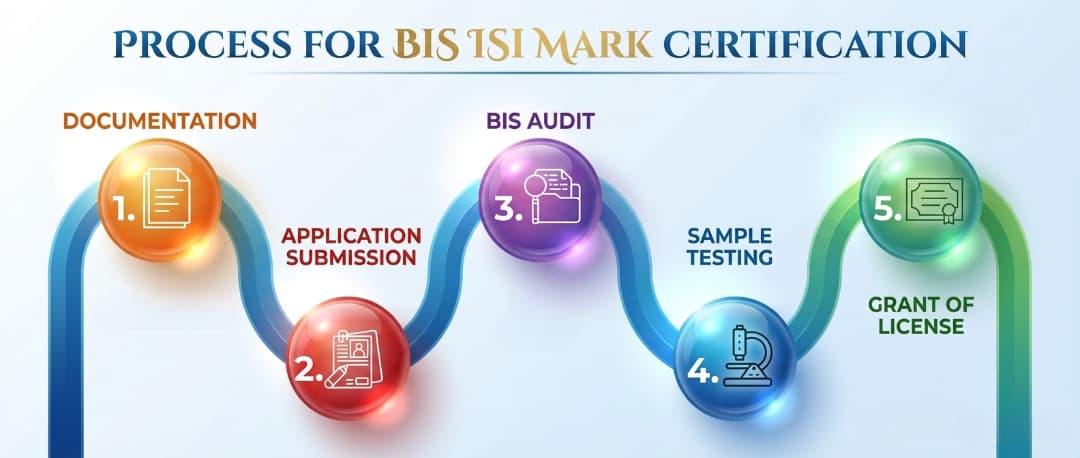
BIS ISI Mark (For Appliances & Industrial Products)
If your imported product falls under a Quality Control Order (QCO), it must carry the ISI Mark — issued by the Bureau of Indian Standards (BIS). Foreign manufacturers must obtain this through the Foreign Manufacturers Certification Scheme (FMCS).
BIS CRS Registration (For Electronics & IT Products)
Electronics, LED lights, power adapters, mobile phones, laptops, and similar products must be registered under the Compulsory Registration Scheme (CRS) of BIS. The importer or brand owner must obtain a BIS registration number (R-XXXXXXXX) that must be displayed on the product.
Impact on Customs Clearance
| Scenario | Customs Outcome |
|---|---|
| Product is under QCO and has valid BIS ISI/CRS | Customs clearance allowed |
| Product is under QCO but lacks BIS certification | Customs clearance DENIED; goods detained or returned |
| Product not under any QCO | BIS certification not required for customs; other certifications may still apply |
Explore: BIS ISI Certification | BIS CRS Registration.
4. Step 3: LMPC Registration — Mandatory for Pre-Packaged Goods
This is one of the most commonly overlooked import requirements. The Legal Metrology (Packaged Commodities) Rules, 2011 require every importer of pre-packaged goods to:
- Obtain LMPC registration from the Legal Metrology Department
- Ensure all packaging carries mandatory declarations in prescribed format
What Must Be Declared on the Package?
- Name and address of importer (Indian entity)
- Country of origin of the product
- Net quantity in metric units (g, kg, ml, l)
- Maximum Retail Price (MRP) inclusive of all taxes
- Month and year of manufacture or import
- Customer care contact number and email
- Generic or common name of the commodity
Important for e-commerce importers: Products sold on Indian e-commerce platforms (Amazon.in, Flipkart, etc.) are subject to the same LMPC labelling rules. Non-compliant products can be delisted and importers penalised.
Get your LMPC registration: Legal Metrology (LMPC).
5. Step 4: EPR Registration — For Waste-Linked Products
If your imported products contain electronic components, plastic packaging, batteries, or are made of rubber (tyres), you likely have an Extended Producer Responsibility (EPR) obligation in India. EPR registration is managed through the Central Pollution Control Board (CPCB) portal and is mandatory for producers, importers, and brand owners (PIBOs).
EPR Obligations by Product Type
| Your Product | EPR Category | Registration With |
|---|---|---|
| Electronics (laptops, phones, TVs, etc.) | E-Waste EPR | CPCB |
| Products with plastic packaging | Plastic Waste EPR | SPCB (state level) |
| Devices with lithium/lead batteries | Battery Waste EPR | CPCB |
| Automotive / industrial tyres | Tyre Waste EPR | CPCB/MoEFCC |
| Lubricating / engine oils | Used Oil EPR | CPCB/SPCBs |
EPR registration links: E-Waste EPR | Battery EPR | Plastic EPR | Tyre EPR | Used Oil EPR.
6. Step 5: WPC ETA Approval — For Wireless & RF Devices
Any device that emits or receives radio frequency signals must have Equipment Type Approval (ETA) from the Wireless Planning & Coordination (WPC) Wing of the Ministry of Communications before it can be imported or sold in India.
Common Imported Products Requiring WPC ETA
- Wi-Fi routers, mesh network systems, wireless access points
- Bluetooth earphones, speakers, keyboards, and mice
- Smart watches and fitness bands with wireless connectivity
- IoT devices — smart plugs, smart thermostats, smart lights
- GPS trackers and fleet management devices
- Baby monitors and home security cameras (wireless)
- Drones with radio control
- Walkie-talkies and two-way radios
WPC ETA typically requires RF test reports from a recognised laboratory and product technical documentation. Approval is product-model specific — each variant of a device needs separate ETA. Get details at: WPC ETA Approval.
7. Step 6: TEC / MTCTE Approval — For Telecom Equipment
The Mandatory Testing and Certification of Telecom Equipment (MTCTE) programme covers equipment used in or connected to Indian telecom networks. Administered by the Telecom Engineering Centre (TEC) under DoT, MTCTE applies to:
- Routers, modems, switches, and network equipment
- CCTV cameras and NVR/DVR systems
- VoIP phones and video conferencing equipment
- Optical fibre and FTTH equipment
- Network interface cards and embedded telecom modules
Many MTCTE categories have already passed their compliance deadlines. Importers bringing in notified products without MTCTE approval face customs clearance issues. Check status and apply through: TEC/MTCTE Approval.
8. Step 7: BEE Registration — For Energy-Intensive Products
Importing products that consume electricity — air conditioners, refrigerators, fans, water heaters, LED lamps — requires compliance with Bureau of Energy Efficiency (BEE) Star Rating norms. For products under mandatory BEE labelling, the Star Label must be displayed on the product before sale.
Importers must:
- Register with BEE as an importer
- Submit product test reports from BEE-recognised labs
- Obtain Star Rating label authorisation
- Display the correct BEE Star Label on all units imported and sold
Details: BEE Registration.
9. Step 8: DGFT Import Licence — For Restricted Items
India’s Foreign Trade Policy (FTP) classifies imports as “Free,” “Restricted,” or “Prohibited.” Restricted items — including certain electronics, telecom equipment, chemicals, and agricultural goods — require a prior import licence from the DGFT (Directorate General of Foreign Trade).
Even “Free” items may have conditions attached. Always verify the import policy against your product’s HS code at the DGFT portal before shipping. PCN India Global assists with all DGFT-related compliance: DGFT License Services.
10. Customs Clearance & How Certifications Affect It
Indian Customs (under CBIC) integrates with regulatory databases to verify certifications during import clearance. Here is what customs checks for common product categories:
| Product Category | What Customs Checks |
|---|---|
| Electronics (phones, laptops, LED) | BIS CRS registration number on product/packaging |
| Electrical appliances (QCO-covered) | BIS ISI Mark validity and licence number |
| Wireless devices | WPC ETA approval certificate |
| Telecom equipment | TEC MTCTE approval |
| Pre-packaged consumer goods | LMPC registration and label compliance |
| Energy-labelled appliances | BEE Star Label |
| Restricted items | DGFT import licence |
A note on risk: Even if your shipment clears customs initially, post-import market surveillance by BIS, CPCB, or Legal Metrology officers can result in product seizure and penalties if certifications are absent or expired.
11. Category-Wise Approval Checklist
| Product | IEC | BIS | LMPC | EPR | WPC | TEC | BEE | DGFT |
|---|---|---|---|---|---|---|---|---|
| Smartphone | ✓ | ✓ CRS | ✓ | ✓ E-waste | ✓ | ✓ | — | Check |
| Wi-Fi Router | ✓ | ✓ CRS | ✓ | ✓ E-waste | ✓ | ✓ | — | Check |
| LED Bulbs | ✓ | ✓ CRS | ✓ | ✓ E-waste | — | — | ✓ | — |
| Split Air Conditioner | ✓ | ✓ ISI | ✓ | — | — | — | ✓ | — |
| Laptop | ✓ | ✓ CRS | ✓ | ✓ E-waste | ✓ (if Wi-Fi) | — | — | Check |
| CCTV Camera (IP/wireless) | ✓ | ✓ CRS | ✓ | ✓ E-waste | ✓ | ✓ | — | Check |
| Food in plastic packaging | ✓ | Check | ✓ | ✓ Plastic | — | — | — | Check |
| Lithium Battery (standalone) | ✓ | ✓ ISI/CRS | ✓ | ✓ Battery | — | — | — | Check |
| Power Adapter / Charger | ✓ | ✓ CRS | ✓ | ✓ E-waste | — | — | — | — |
12. Documents Required for Importing to India
- Import Export Code (IEC) certificate
- GST registration certificate
- BIS certification / registration number (product-category specific)
- LMPC registration certificate
- WPC ETA approval certificate (for wireless devices)
- TEC MTCTE approval certificate (for telecom equipment)
- EPR authorization from CPCB (for applicable categories)
- BEE Star Rating authorisation (for energy-labelled products)
- DGFT import licence (for restricted goods)
- Bill of Lading / Airway Bill
- Commercial invoice and packing list
- Certificate of Origin
- Product test reports from accredited laboratories
13. Step-by-Step Import Compliance Process
- HS Code Classification: Determine the correct Harmonised System (HS) code for your product.
- Regulatory Mapping: Identify all mandatory certifications using HS code and product category.
- IEC Registration: Ensure your IEC is active and updated on the DGFT portal.
- Apply for Certifications: Begin BIS, LMPC, WPC, TEC, EPR, BEE applications in parallel — do not wait for one before starting another.
- Lab Testing: Submit product samples to recognised labs for required tests.
- Label Preparation: Update product packaging with all mandatory declarations (MRP, MFG date, importer details, etc.).
- EPR Plan Filing: Submit EPR collection and recycling targets/plan to CPCB before first import.
- First Shipment: Ensure all certificates are in hand before the shipment departs from the origin country.
- Customs Filing: Include all certification references in customs documentation (Bill of Entry).
- Annual Compliance: Renew certifications, file EPR annual reports, update BEE labels as star ratings are revised.
14. Common Import Compliance Mistakes
- Starting certification after shipment: This is the single biggest mistake. Certifications take weeks to months; starting only when the shipment is on water guarantees a customs hold.
- Assuming CE/FCC replaces Indian approvals: They do not. India requires independent testing and certification under Indian standards.
- Ignoring LMPC until Amazon/Flipkart rejects the product: LMPC is a legal requirement before import, not a platform requirement.
- Not registering under EPR because volumes are “small”: EPR registration thresholds apply to volume targets, not to whether registration is required. Even single-unit importers may need EPR authorization.
- Getting WPC ETA but missing TEC MTCTE: For products like routers and IP cameras, both are often required. Treating them as interchangeable is a compliance error.
- BIS registration for one model not extended to new variants: Each new model number or variant may require a separate BIS application.
15. Latest Regulatory Updates for Importers (2024–2025)
- QCO Expansion: New QCOs have been issued for toys, chemicals, furniture, textiles, and more — expanding the list of products requiring BIS ISI certification before import.
- MTCTE Phase 2+ Deadlines: Additional telecom equipment categories crossed MTCTE compliance deadlines; customs is actively checking for MTCTE approval.
- E-Waste EPR Targets Tightened: CPCB has revised upward the annual collection targets for e-waste EPR registrants.
- BIS Scheme-X: New certification route for products not previously covered by ISI or CRS — opens opportunities for importers of niche product categories.
- LMPC Digital Compliance: Legal Metrology Department has digitised the LMPC registration process; renewal and updates can now be filed online.
- WPC Portal Revamp: Faster ETA processing through the upgraded WPC online portal with digital document upload.
Need Expert Assistance with Import Compliance in India?
Managing import compliance across BIS, LMPC, EPR, WPC, TEC, BEE, and DGFT simultaneously is genuinely complex — especially for businesses new to the Indian market. A missed approval means customs holds, financial losses, and market entry delays that can cost far more than the certification fees themselves.
PCN India Global has extensive experience helping importers, foreign manufacturers, brand owners, and e-commerce businesses achieve full regulatory compliance before their first Indian shipment. We handle everything — regulatory mapping, documentation, lab coordination, application filing, label review, and ongoing renewal — so you can focus on growing your business in India.
We specialise in:
- BIS ISI Mark (FMCS) & BIS CRS Registration for importers
- LMPC Registration & packaging label compliance review
- EPR Registration — E-Waste, Battery, Plastic, Tyre & Used Oil
- WPC ETA Approval for wireless and RF devices
- TEC/MTCTE Approval for telecom equipment
- BEE Star Rating Registration for energy-labelled products
- DGFT IEC & import licensing
Phone: 08010905029 | Email: bdm@pcnindiaglobal.com | Website: https://pcnindiaglobal.com
Speak with a compliance expert today — your first consultation is free.
Frequently Asked Questions (FAQs)
Q1: What is the first thing I need to import products to India?
The first mandatory requirement is an Import Export Code (IEC) from DGFT. Without an IEC, no customs clearance is possible in India. Beyond IEC, the specific certifications required depend on your product category — BIS, LMPC, WPC, TEC, EPR, or BEE may all apply.
Q2: Is it possible for a foreign company to import and sell directly in India?
A foreign company cannot directly import and sell to Indian consumers without an Indian entity (subsidiary, branch, or appointed distributor). The Indian entity holds the IEC and is the importer of record. Foreign manufacturers can, however, get BIS FMCS certification in their name and appoint an Authorised Indian Representative (AIR).
Q3: How early before the shipment date should I start the certification process?
Ideally, 3–6 months before the first shipment. BIS certification can take 2–4 months; EPR registration 4–8 weeks; WPC ETA 4–8 weeks; LMPC registration 2–4 weeks. Running applications in parallel reduces total time, but some testing cannot begin until lab slots are available.
Q4: Are products sold only online exempt from any of these certifications?
No. Online sales through Indian e-commerce platforms are subject to the same mandatory certification requirements as offline sales. In fact, major platforms like Amazon.in actively audit seller compliance and can delist non-certified products.
Q5: What happens to a shipment that arrives without BIS certification?
Customs can deny clearance, place the goods in a bonded warehouse (at the importer’s cost), or in serious cases, direct the goods for re-export or destruction. The importer may also face penalties under the BIS Act, 2016.
Q6: Do small-volume importers need EPR registration?
Yes. EPR registration requirements do not have a “small importer” exemption at the registration level. All producers, importers, and brand owners of covered products must register — the targets (quantities to be collected/recycled) are then proportional to import volumes.
Q7: Can PCN India Global help with compliance for multiple product categories?
Yes — this is one of our core strengths. We regularly manage multi-category compliance for clients importing diverse product ranges. We handle all certifications under a single engagement, ensuring nothing is missed and all timelines are coordinated.
Related Compliance Guides
- Solar Panel Compliance
- BIS QCO Deadlines 2026: New Mandatory Certifications Importers Can’t Ignore
- DGFT Import Export Code (IEC) for Foreign Manufacturers Entering the Indian Market: Complete Guide
Related Guides
- GS1 Barcodes and GTINs in India
- STQC Certification in India
- BIS ISI Certification for Gypsum Based Building Materials in India
Need expert help? See our product certification services.