BIS Certification for LED Lights in India: CRS Registration Explained
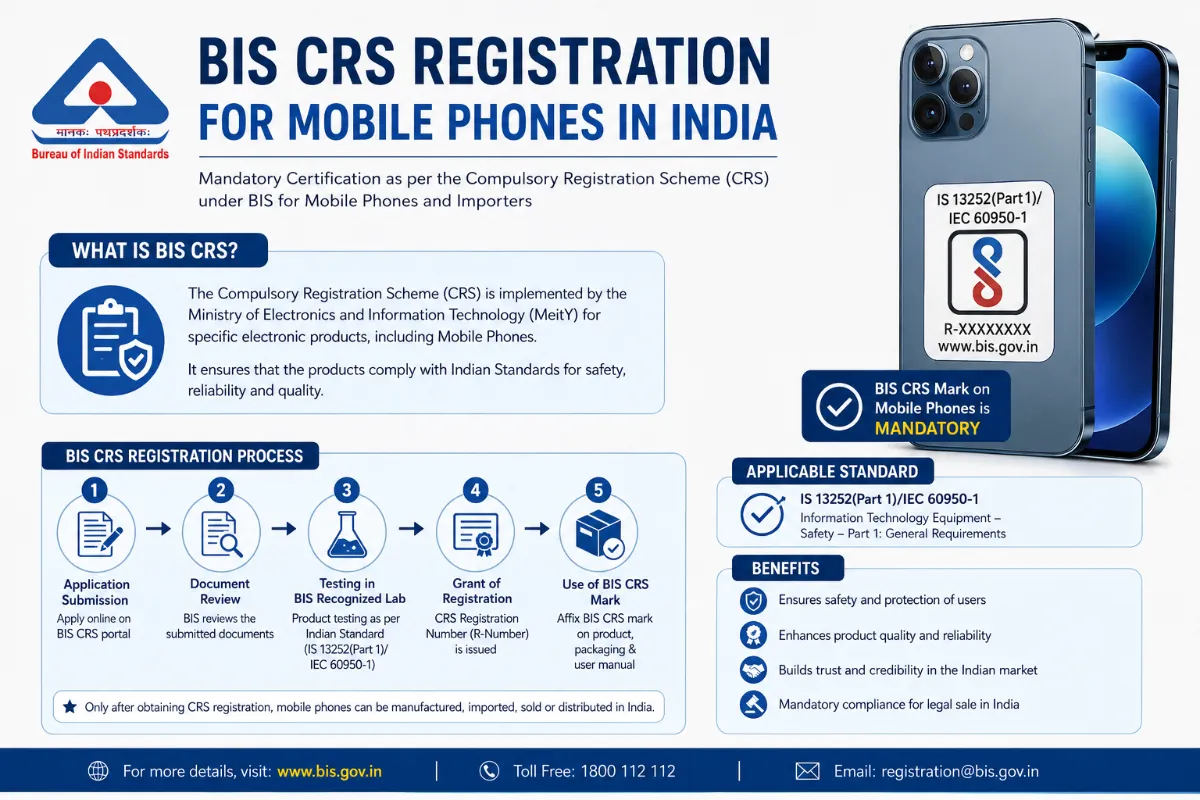
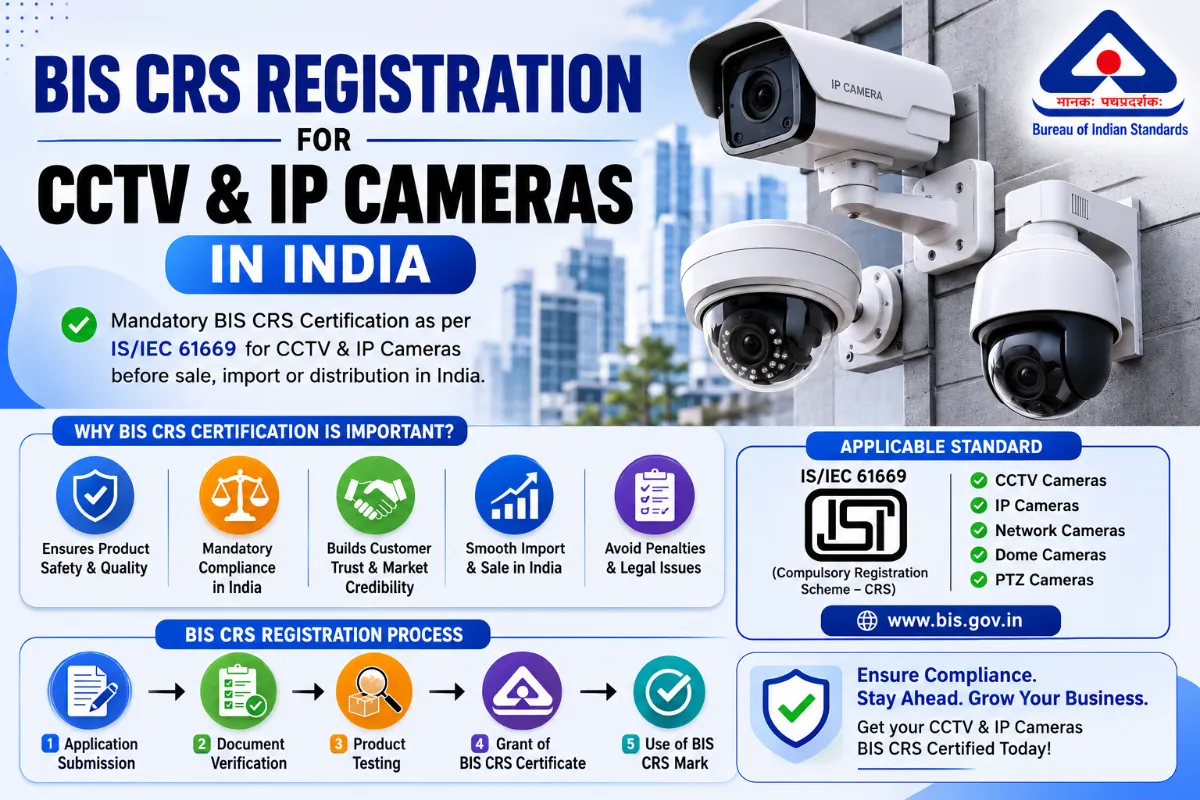
LED lighting is one of the highest-volume product categories crossing into India, driven by the country’s enormous demand for efficient, affordable illumination across homes, offices, factories, and streets. It is also firmly inside India’s mandatory certification net. If you manufacture or import LED bulbs, tubes, modules, drivers, or luminaires, you cannot legally sell them in India without a valid BIS registration under the Compulsory Registration Scheme (CRS). The good news for importers is that LED certification follows the registration-based CRS route, which — unlike the ISI mark route used for appliances and toys — does not require a factory audit. That makes it faster and more affordable. But faster still depends on choosing the right standard, testing in a recognised lab, and keeping your documentation airtight. This guide breaks down exactly what’s required to get LED products legally onto Indian shelves and marketplaces in 2026. 1. Is BIS Certification Mandatory for LED Lights? Yes. LED lighting products fall under the Compulsory Registration Scheme administered by BIS. Under CRS, a product cannot be manufactured, imported, stored for sale, or sold in India until it has been registered with BIS and carries the BIS Standard Mark along with the registration number. There is no market-testing exemption: registration must be in place before the first unit is sold. The scheme is overseen in coordination with the Ministry of Electronics and Information Technology (MeitY), which notifies electronic and IT products — including lighting — into the CRS framework. As the notified list expands and standards are updated, manufacturers need to keep pace with which of their SKUs require registration. 2. Which LED Products Are Covered? CRS coverage for lighting spans the most common commercial categories. Products that typically require registration include: If your product emits light using LED technology and is intended for general lighting, it is very likely in scope. Specialised or niche lighting may have different treatment, so confirming your exact category against the current notified list is an essential first step. 3. The Applicable Indian Standards LED certification is built on a family of standards, and matching your product to the correct one is critical — choosing the wrong IS is one of the most common causes of rejection. The key standards include: Standard Scope IS 16102 (Part 1) Safety requirements for self-ballasted LED lamps for general lighting IS 16102 (Part 2) Performance requirements for self-ballasted LED lamps IS 16103 / IS 16106 LED modules for general lighting — safety and performance IS 15885 (Part 2/Sec 13) AC or DC supplied electronic control gear (LED drivers) for LED modules IS 10322 (Part 5) Luminaires — including fixed general-purpose LED luminaires Because a single lighting product can integrate a lamp, a module, and a driver, manufacturers sometimes need to consider more than one standard across their product range. Getting this mapping right at the outset prevents costly mid-process corrections. 4. The CRS Registration Process — Step by Step 5. Documents Required 6. Timeline, Cost, and Validity Because CRS skips factory inspection, the timeline is relatively short. With clean documentation and an available lab slot, LED registration commonly takes around four to six weeks from testing to grant. Cost is driven primarily by laboratory testing — which varies with the number of models and the parameters tested — plus BIS fees and, for foreign applicants, the AIR. Each additional model or series adds to the total, so brands with wide ranges should budget per-SKU. A BIS CRS registration is typically valid for two years and is renewable. Treat renewal as a standing calendar item: letting a registration lapse means losing the legal right to sell until it is restored. 7. Common Mistakes That Delay LED Registration 8. Penalties for Non-Compliance Selling uncertified LED products is a real commercial risk, not a technicality. Non-compliant goods can be seized by customs at import, banned from sale, and removed from e-commerce platforms. The BIS Act, 2016 provides for fines and imprisonment for selling products without the required registration. For a high-volume, price-sensitive category like LED lighting, a single detained consignment can wipe out the margin on an entire order — which is exactly why certification should be secured before goods ship. 9. Marking, Labelling, and the BIS Standard Mark Registration is only useful if the product is marked correctly. Once a CRS registration is granted, the product — and typically its packaging — must carry the BIS Standard Mark together with the unique registration number (the R-number) assigned to that model. The mark tells customs officers, retailers, marketplaces, and consumers that the product is legitimately registered. Incorrect, missing, or counterfeit marking is treated as a compliance failure in its own right, even if a valid registration technically exists in the background. For importers, marking discipline matters at the border. Customs increasingly checks that the physical product and its packaging bear the correct mark and R-number and that these match the importer’s documentation. A mismatch between the registration on file and what is printed on the product can hold up a consignment just as effectively as having no registration at all. It is good practice to confirm the artwork and marking with your supplier before mass production, not after the goods have shipped. Each distinct model generally needs its own registration and its own R-number. Manufacturers selling a range of wattages, form factors, or sub-brands should not assume a single registration covers the whole family — clarify the model boundaries early so every SKU you intend to sell is properly covered. 10. A Practical Roadmap for Importers For an importer bringing LED products into India for the first time, the path is most reliable when approached in this order: 11. How LED Certification Fits With Other Requirements BIS CRS registration establishes that an LED product is safe, but it is not always the only compliance touchpoint. Depending on the product and how it is marketed, manufacturers may encounter additional requirements that sit alongside the BIS registration. Understanding these adjacencies prevents nasty surprises after the CRS registration