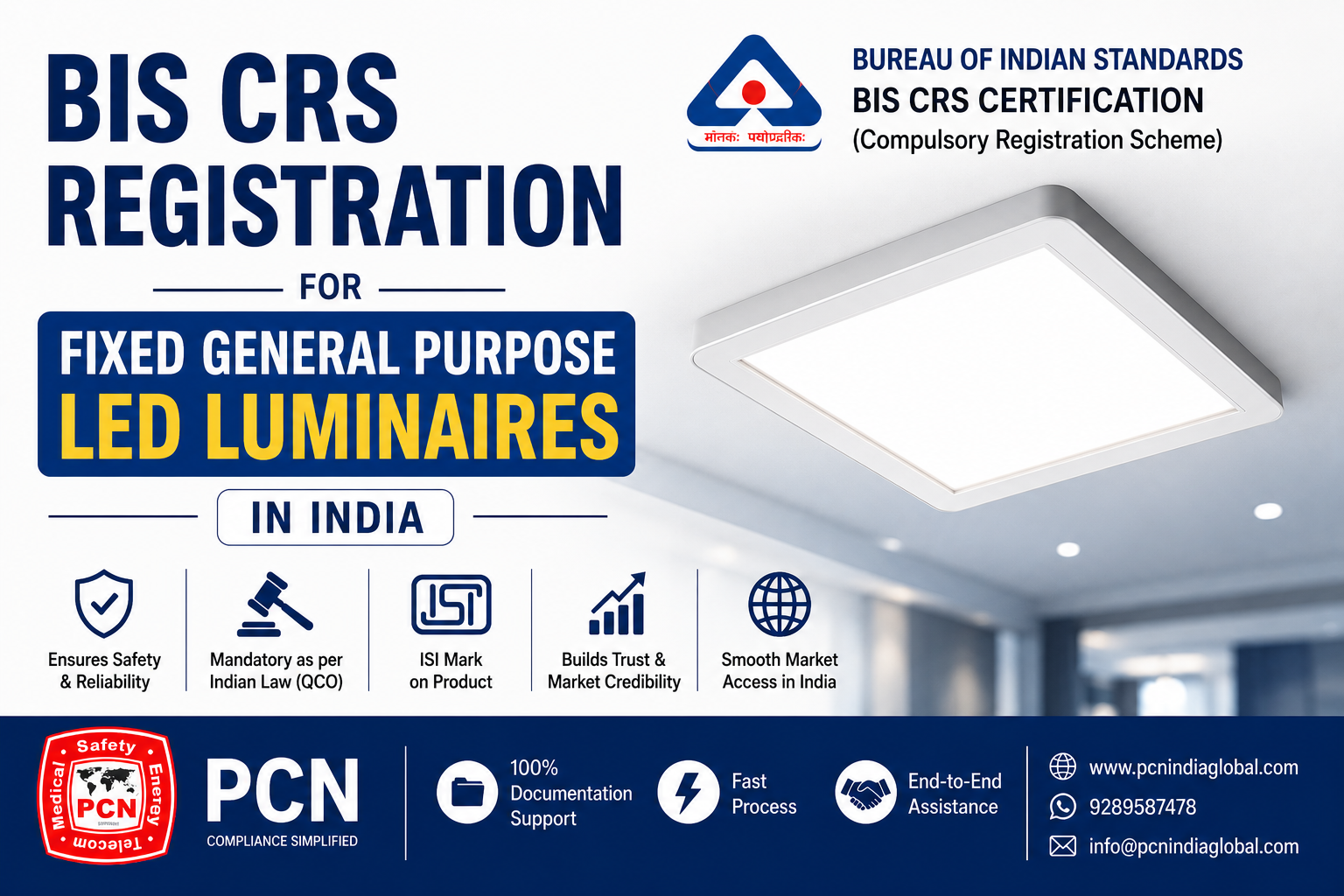

BIS CRS Registration for LED Lighting Chains & Rope Lights in India: IS 10322 (Part 5/Sections 7 & 9) and the Complete Process
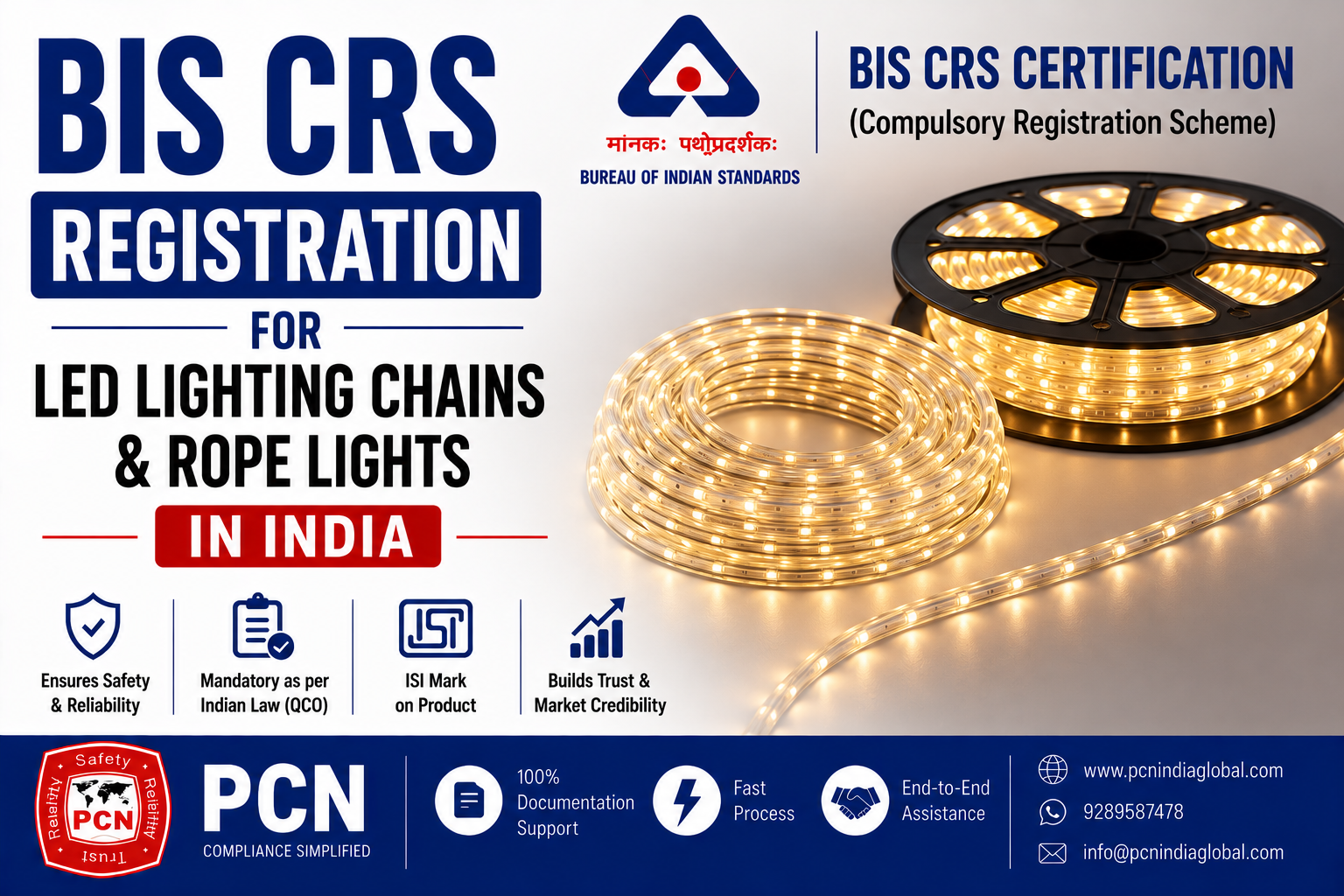
Decorative lighting is woven into Indian life — the twinkling LED chains and flexible rope lights that adorn homes, streets, shops, and venues for Diwali, weddings, festivals, and celebrations of every kind, sold in staggering volumes each season. An LED lighting chain is a string of small LEDs on a cable; a rope light is a flexible tube of LEDs used for outlining and accent lighting. Both connect to the mains and are handled, hung, and draped by ordinary users, often outdoors and in damp conditions. Because they are notified lighting products, LED lighting chains and rope lights fall under the BIS Compulsory Registration Scheme (CRS). A covered product must be registered before it can be sold in India, making BIS CRS registration the mandatory safety gateway to this large seasonal market. Decorative lighting is a category where low prices and huge volumes have historically attracted substandard, unsafe products — which is exactly why a common safety baseline matters. This guide explains the applicable standards, the CRS self-declaration process, the documents required, realistic timelines, and how the safety registration fits within the wider compliance picture. Why LED Chains and Rope Lights Fall Under CRS The Compulsory Registration Scheme operates under the Electronics and Information Technology Goods (Requirement of Compulsory Registration) Order, administered by BIS under the BIS Act, 2016. LED lighting chains and lighting chains (rope lights) are notified under CRS, meaning a covered product must be tested against the applicable Indian Standard, registered with BIS, and marked with its registration number before it can be manufactured, imported, sold, distributed, or stored for sale in India. The safety rationale is direct and heightened by how these products are used. Decorative lights connect to the mains and are strung across balconies, trees, walls, and outdoor structures by ordinary consumers, frequently in damp or wet conditions and often left on for hours. Substandard cable, poor insulation, weak connections, or inadequate weather protection can create electric-shock or fire hazards in the hands of the general public. Because these products sell in enormous seasonal volumes at very low prices, the risk of unsafe stock reaching consumers is real, and CRS provides a common safety baseline verified by India-specific testing. Selling an unregistered notified decorative light is an offence under the BIS Act, and registration is also a commercial gate: marketplaces increasingly verify it, and customs checks it at import. The Applicable Standards: IS 10322 (Part 5/Sections 7 & 9) Decorative lighting is registered under the relevant sections of the IS 10322 luminaire-safety series (aligned with the international IEC 60598 family): LED lighting chains are registered under IS 10322 (Part 5/Section 7):2017, the particular safety requirements for lighting chains. Lighting chains (rope lights) are registered under IS 10322 (Part 5/Section 9):2017, the particular safety requirements for rope lights. These sections address the specific hazards of these decorative products: protection against electric shock, the integrity of the cable and connections, the ingress protection needed where products are used outdoors, thermal behaviour, and mechanical robustness for products that are repeatedly handled, coiled, and hung. Manufacturers should confirm the exact applicable standard, section, and current edition for their specific product — chain or rope light — against the latest BIS notification before testing, since certification rests on demonstrated conformity to the correct standard. What the CRS Safety Test Examines Understanding what the laboratory checks clarifies why registration matters for decorative lighting. The standard evaluates the product against a defined set of hazards. Electric-shock protection is verified for the mains-connected cable and any user-accessible parts — critical because these products are handled while installed and often used outdoors. The integrity of the cable, the joints between LEDs, and the plug and connections is examined, since these are the points most likely to fail in a repeatedly coiled and hung product. Ingress protection is assessed for products intended for outdoor use, so water and moisture cannot reach live parts — a real concern for lights strung outdoors in the monsoon or washed by rain during festivals. Thermal behaviour and fault-condition behaviour are checked. Because a decorative light is a mains-connected, user-handled product often used outdoors in damp conditions, the integrity of its cable and connections and its resistance to moisture are the central safety concerns, which is why India requires local testing rather than accepting overseas certificates alone. Huge Volumes, Low Prices, Real Risks The decorative-lighting category has a distinctive economic profile that explains both why it is regulated and how a manufacturer should approach compliance. These products sell in vast quantities in short seasonal windows around festivals, at very low unit prices, which historically drew a flood of cheap, unbranded, and often unsafe imports — thin cable, poor insulation, no weatherproofing, and flimsy connections that pose genuine shock and fire risks in the hands of families decorating their homes. Bringing these products under CRS was a direct response to that reality, aiming to squeeze the least safe products out of the market by requiring a verified safety baseline. For a legitimate manufacturer or importer, this changes the competitive landscape in a helpful way: a valid CRS registration distinguishes a properly engineered, safe product from the uncertified stock that competes only on price, and marketplaces increasingly enforce the requirement by screening listings. The practical lesson is that decorative lighting cannot be treated as too cheap or too seasonal to warrant compliance — an unregistered decorative light is as non-compliant as any other unregistered product, and it is effectively unsellable through the major channels that now verify registration. For a serious player in this market, treating CRS registration as part of offering a safe, trustworthy product — rather than an obstacle to the lowest possible price — aligns compliance with building a durable seasonal business. Step-by-Step: BIS CRS Registration for Decorative Lighting CRS is a test-and-register scheme with no factory inspection. Our team manages each stage end to end, but every applicant should understand the sequence. Confirm the product and section. Determine whether the product is a lighting chain (IS