BIS Certification for Gas Cylinder Service Valves in India: Standards, Process & Compliance

A service valve is a small component carrying an enormous responsibility. It is the controlled opening through which liquefied petroleum gas (LPG) and other compressed gases flow in and out of a cylinder, and a defective or sub-standard valve is a direct safety hazard — a potential source of leaks, fires, and explosions. For that reason, valves and valve fittings for gas cylinders are among the most strictly regulated components in India, requiring mandatory BIS certification under a notified Quality Control Order before they can be manufactured, imported, or sold. For manufacturers and importers of cylinder valves, regulators, and related fittings, compliance is not optional and not a formality. This guide explains exactly what BIS certification for service valves involves: the applicable Indian Standards, how the BIS requirement interacts with PESO’s separate safety regime, the certification route and process, the documents you will need, realistic timelines, and the consequences of getting it wrong. 1. Is BIS Certification Mandatory for Service Valves? Yes. Cylinders, valves, and regulators are covered by notified Quality Control Orders (QCOs) issued under the authority of the Bureau of Indian Standards Act, 2016. Once a product is brought under a QCO, manufacturing, importing, storing for sale, selling, or distributing it without a valid BIS licence and the ISI mark is prohibited. There is no minimum-quantity exemption: the requirement applies to every unit placed on the Indian market, whether produced domestically or imported. The rationale is straightforward. Because gas cylinder valves are safety-critical, the government uses the QCO mechanism to ensure that every valve sold in India is built to a verified standard and produced by a manufacturer whose process BIS has audited and approved. Unlike a voluntary quality badge, the ISI mark on a valve is a legal precondition for placing it on the market. 2. The Applicable Indian Standards Several Indian Standards govern valves and fittings depending on the gas, the cylinder, and the application. The most relevant include: Standard Scope IS 8776 Service valves for LPG cylinders / containers IS 8737 Valve fittings for LPG cylinders of capacity greater than 5 litres IS 3224 Valve fittings for compressed gas cylinders (excluding LPG cylinders) IS 3745 / IS 15100 Other valve and fitting specifications for gas cylinder applications Selecting the correct standard for your exact valve type and gas application is the essential first step. A valve intended for LPG service is certified against a different standard than one for industrial compressed gases, and applying under the wrong standard is one of the most common causes of rejection and delay. Because the standards specify materials, dimensions, sealing performance, and endurance requirements, the design and manufacture of the valve must be matched precisely to the standard from the outset. 3. The Dual Framework: BIS and PESO Valves for gas cylinders sit at the intersection of two regulatory regimes, and it is important not to confuse them. BIS, through the ISI mark, certifies that the valve conforms to the relevant Indian Standard for design, materials, and performance. PESO — the Petroleum and Explosives Safety Organisation — separately administers the safety framework around gas cylinders, valves, and regulators under the Gas Cylinder Rules. Depending on the product and activity, a manufacturer or importer may need to satisfy both BIS certification requirements and PESO approval requirements. In practice this means valve compliance should be planned holistically. Treating the BIS ISI mark and PESO approval as a single coordinated workstream — rather than two disconnected tasks — prevents the situation where a product is certified under one regime but blocked under the other. Importers in particular should map both requirements before placing an order, because a consignment can be held if either approval is missing. 4. The Certification Route: ISI Mark (Scheme-I) Service valves are certified under the ISI mark route, Scheme-I of the BIS (Conformity Assessment) Regulations, 2018. Unlike the registration-based CRS used for electronics, Scheme-I includes a factory inspection: BIS verifies not just that a sample valve passes testing, but that the manufacturing unit has the systems to produce conforming valves consistently. The broad process is: 5. Special Requirements for Foreign Manufacturers Overseas valve manufacturers certify through the Foreign Manufacturers Certification Scheme (FMCS) version of the ISI route. Two points are critical. First, the foreign manufacturer must appoint an Authorised Indian Representative (AIR) — a person or entity resident in India who acts as the official liaison with BIS and bears certain responsibilities for the licence. Second, the factory audit requires BIS inspectors to travel to the overseas plant, adding time and cost. Foreign applicants should budget for audit travel and the longer timeline this entails, typically several months, and should ensure the AIR’s details match exactly across every document to avoid avoidable delays. 6. Documents and Timeline Typical documentation includes the manufacturing licence or business registration, details of the production process and in-house testing facilities, material and design specifications for the valve, trademark or brand authorisation, and — for foreign applicants — the AIR appointment and authorisation letters. On timeline, a domestic application with an inspection-ready factory and clean documentation commonly runs a few months from application to grant; foreign applications run longer because of audit scheduling. The licence is typically valid for two years and is renewable subject to continued compliance and surveillance. 7. Why Valve Quality Is Non-Negotiable It is worth pausing on why valves attract such intense regulatory attention. A gas cylinder valve is the single point that contains pressurised, flammable gas and controls its release. If the seal fails, the body cracks, or the materials corrode, the result is a leak — and a leak of LPG or another flammable gas in a confined space is a fire or explosion waiting for an ignition source. The standards exist precisely because the failure mode is catastrophic, not cosmetic. For a manufacturer, this means quality control cannot be an afterthought: material traceability, dimensional accuracy, pressure testing, and endurance verification are the substance of compliance, and they are exactly what a BIS factory audit examines. For

BIS Certification for LED Lights in India: CRS Registration Explained

LED lighting is one of the highest-volume product categories crossing into India, driven by the country’s enormous demand for efficient, affordable illumination across homes, offices, factories, and streets. It is also firmly inside India’s mandatory certification net. If you manufacture or import LED bulbs, tubes, modules, drivers, or luminaires, you cannot legally sell them in India without a valid BIS registration under the Compulsory Registration Scheme (CRS). The good news for importers is that LED certification follows the registration-based CRS route, which — unlike the ISI mark route used for appliances and toys — does not require a factory audit. That makes it faster and more affordable. But faster still depends on choosing the right standard, testing in a recognised lab, and keeping your documentation airtight. This guide breaks down exactly what’s required to get LED products legally onto Indian shelves and marketplaces in 2026. 1. Is BIS Certification Mandatory for LED Lights? Yes. LED lighting products fall under the Compulsory Registration Scheme administered by BIS. Under CRS, a product cannot be manufactured, imported, stored for sale, or sold in India until it has been registered with BIS and carries the BIS Standard Mark along with the registration number. There is no market-testing exemption: registration must be in place before the first unit is sold. The scheme is overseen in coordination with the Ministry of Electronics and Information Technology (MeitY), which notifies electronic and IT products — including lighting — into the CRS framework. As the notified list expands and standards are updated, manufacturers need to keep pace with which of their SKUs require registration. 2. Which LED Products Are Covered? CRS coverage for lighting spans the most common commercial categories. Products that typically require registration include: If your product emits light using LED technology and is intended for general lighting, it is very likely in scope. Specialised or niche lighting may have different treatment, so confirming your exact category against the current notified list is an essential first step. 3. The Applicable Indian Standards LED certification is built on a family of standards, and matching your product to the correct one is critical — choosing the wrong IS is one of the most common causes of rejection. The key standards include: Standard Scope IS 16102 (Part 1) Safety requirements for self-ballasted LED lamps for general lighting IS 16102 (Part 2) Performance requirements for self-ballasted LED lamps IS 16103 / IS 16106 LED modules for general lighting — safety and performance IS 15885 (Part 2/Sec 13) AC or DC supplied electronic control gear (LED drivers) for LED modules IS 10322 (Part 5) Luminaires — including fixed general-purpose LED luminaires Because a single lighting product can integrate a lamp, a module, and a driver, manufacturers sometimes need to consider more than one standard across their product range. Getting this mapping right at the outset prevents costly mid-process corrections. 4. The CRS Registration Process — Step by Step 5. Documents Required 6. Timeline, Cost, and Validity Because CRS skips factory inspection, the timeline is relatively short. With clean documentation and an available lab slot, LED registration commonly takes around four to six weeks from testing to grant. Cost is driven primarily by laboratory testing — which varies with the number of models and the parameters tested — plus BIS fees and, for foreign applicants, the AIR. Each additional model or series adds to the total, so brands with wide ranges should budget per-SKU. A BIS CRS registration is typically valid for two years and is renewable. Treat renewal as a standing calendar item: letting a registration lapse means losing the legal right to sell until it is restored. 7. Common Mistakes That Delay LED Registration 8. Penalties for Non-Compliance Selling uncertified LED products is a real commercial risk, not a technicality. Non-compliant goods can be seized by customs at import, banned from sale, and removed from e-commerce platforms. The BIS Act, 2016 provides for fines and imprisonment for selling products without the required registration. For a high-volume, price-sensitive category like LED lighting, a single detained consignment can wipe out the margin on an entire order — which is exactly why certification should be secured before goods ship. 9. Marking, Labelling, and the BIS Standard Mark Registration is only useful if the product is marked correctly. Once a CRS registration is granted, the product — and typically its packaging — must carry the BIS Standard Mark together with the unique registration number (the R-number) assigned to that model. The mark tells customs officers, retailers, marketplaces, and consumers that the product is legitimately registered. Incorrect, missing, or counterfeit marking is treated as a compliance failure in its own right, even if a valid registration technically exists in the background. For importers, marking discipline matters at the border. Customs increasingly checks that the physical product and its packaging bear the correct mark and R-number and that these match the importer’s documentation. A mismatch between the registration on file and what is printed on the product can hold up a consignment just as effectively as having no registration at all. It is good practice to confirm the artwork and marking with your supplier before mass production, not after the goods have shipped. Each distinct model generally needs its own registration and its own R-number. Manufacturers selling a range of wattages, form factors, or sub-brands should not assume a single registration covers the whole family — clarify the model boundaries early so every SKU you intend to sell is properly covered. 10. A Practical Roadmap for Importers For an importer bringing LED products into India for the first time, the path is most reliable when approached in this order: 11. How LED Certification Fits With Other Requirements BIS CRS registration establishes that an LED product is safe, but it is not always the only compliance touchpoint. Depending on the product and how it is marketed, manufacturers may encounter additional requirements that sit alongside the BIS registration. Understanding these adjacencies prevents nasty surprises after the CRS registration

BIS Certification for Toys in India (IS 9873): The Complete ISI Mark Guide

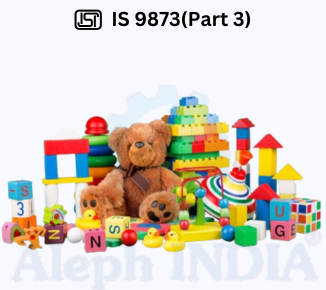
India is one of the world’s largest and fastest-growing toy markets, and it has become one of the most tightly regulated. Since 2021, no toy intended for children up to the age of 14 — whether a soft plush, a plastic building set, a die-cast car, or a battery-operated robot — can be legally manufactured, imported, or sold in India without carrying the BIS ISI mark. For importers and overseas manufacturers in particular, this requirement has reshaped how products enter the country, and getting it wrong now means seized shipments and blocked listings rather than a simple warning. The rules exist for a reason. Toys are placed in the hands — and often the mouths — of small children, so the standards focus heavily on mechanical safety (no sharp edges or small parts that could choke), chemical safety (limits on heavy metals and harmful substances), and flammability. This guide walks through exactly what BIS toy certification involves in 2026: the legal basis, the applicable standards, the step-by-step process for both Indian and foreign manufacturers, realistic timelines and costs, and the penalties you are exposed to if you skip it. 1. Is BIS Certification Mandatory for Toys? Yes — and there are no shortcuts. The Government of India notified the Toys (Quality Control) Order, 2020, through the Department for Promotion of Industry and Internal Trade (DPIIT). The order was published on 25 February 2020 and came into force from January 2021. It makes BIS certification under the ISI mark mandatory for all toys meant for children up to 14 years of age, covering both non-electric toys and electric toys. This is not a labelling guideline or a voluntary quality badge. Under the Bureau of Indian Standards Act, 2016, manufacturing, importing, storing for sale, or selling a covered toy without a valid BIS licence is a punishable offence. The requirement applies equally to large multinationals and small workshops, and importantly it has no minimum-quantity exemption — a single imported consignment without certification can be detained at customs. 2. The Standards: IS 9873 and IS 15644 Toy safety in India is governed primarily by the IS 9873 series, which mirrors the international ISO 8124 framework. The relevant parts cover different safety dimensions: Important 2025–2027 transition: BIS has revised the core mechanical-safety standard to IS 9873 (Part 1): 2025, aligned with the latest ISO 8124-1. The 2025 version currently runs concurrently with the older IS 9873 (Part 1): 2019 until 22 March 2027. After that date, BIS will grant licences only under the 2025 version. Manufacturers certifying now should plan their testing against the 2025 standard so they are not forced into an early re-certification. 3. Which Toys Are Covered — and the Limited Exemptions The QCO casts a wide net. Covered products include, among many others: dolls and soft toys; ride-on toys and tricycles; construction and building sets; puzzles and games; toy weapons; electronic and battery-operated toys; musical toys; and inflatable toys. If a product is designed or clearly intended for play by a child up to 14, assume it is in scope. A narrow set of exclusions exists — for example, certain products that are not classified as toys under the standard, and goods covered by specific exemption notifications. There is also a facility for non-commercial imports of very small quantities under defined conditions. These exemptions are limited and frequently misunderstood, so it is wise to confirm your specific product’s status rather than assume it falls outside the order. 4. The Certification Route: ISI Mark (Scheme-I) Unlike electronics, which are certified under the registration-based CRS, toys are certified under the ISI mark route (Scheme-I of the BIS Conformity Assessment Regulations). This is significant because Scheme-I includes a factory inspection — BIS does not simply rely on a lab report; it verifies that the manufacturing unit can consistently produce conforming product. The broad process is as follows: 5. Special Requirements for Foreign Manufacturers Overseas toy makers must certify through the Foreign Manufacturers Certification Scheme (FMCS) version of the ISI route. Two requirements stand out. First, the foreign manufacturer must appoint an Authorised Indian Representative (AIR) — a person or entity resident in India who acts as the official liaison with BIS and bears certain legal responsibilities. Second, the BIS factory audit means inspectors travel to the overseas plant, which adds logistics, time, and cost compared with a domestic application. Foreign applicants should budget for audit travel and stay, and for the longer timeline this entails. 6. Documents You Will Need 7. Timeline and Cost Timelines vary with factory readiness, documentation quality, and lab queue times. As planning baselines: On cost, the total is built from BIS application and inspection fees, laboratory testing charges for each applicable IS part, the marking/licence fee, and — for foreign applicants — auditor travel and stay. Because chemical and mechanical testing covers several parameters, testing is usually the largest single cost. A consultant’s involvement adds to the fee but materially reduces the risk of a rejection that would otherwise force re-testing and re-filing. 8. Penalties for Selling Uncertified Toys Enforcement of the toy QCO has been visible and deliberate, with regulators conducting market and e-commerce sweeps. The consequences of non-compliance are serious: 9. Surveillance, Renewal, and Staying Compliant Obtaining the ISI mark is not the end of the compliance journey — it is the beginning of an ongoing relationship with BIS. Once a licence is granted, the manufacturer is expected to maintain the same standards of quality and safety that were verified during certification. BIS operates a system of market surveillance and periodic factory surveillance, under which samples may be drawn from the market or the factory and tested to confirm continued conformity. A product that passes at certification but drifts out of specification later can have its licence suspended or cancelled. Renewal is equally important. ISI licences are granted for a defined term and must be renewed to remain valid. A lapsed licence means the legal right to use the ISI mark ceases — and continuing
BIS Certification Cost and Timeline India 2026

BIS Certification Cost & Timeline in India 2026: A Complete Breakdown

“How much will it cost and how long will it take?” is the first question almost every manufacturer asks about BIS certification — and the honest answer is: it depends. Cost and timeline vary with the certification route, the product, the number of models, and how clean your documentation is. But “it depends” doesn’t help you plan, so here is a realistic breakdown of what to budget for in 2026. 1. First, Know Which Route Applies to You BIS certification isn’t one process. The route determines both the cost and the timeline: 2. Typical Cost Components Whatever the route, your total cost is built from the same building blocks: Cost component What it covers Notes Product testing Lab charges per model against the applicable IS Largest variable; rises with multiple models/series BIS application & registration fees Government fees payable to BIS Fixed schedule; varies by scheme Factory audit (ISI/FMCS only) On-site inspection of the manufacturing unit Adds auditor travel & time; not in CRS AIR / representative Authorised Indian Representative for foreign makers Mandatory for overseas applicants Consultant / filing support Documentation, coordination, query handling Optional but reduces rejection risk As a real-world anchor: a single power-bank model under CRS typically runs in the region of ₹28,000 to ₹1.5 lakh per model once testing and fees are combined — and that figure scales up with every additional model or variant you add. 3. Realistic Timelines Timelines depend heavily on lab queue times and document readiness, but as a planning baseline: 4. The Hidden Costs Importers Forget 5. How to Keep Costs and Time Down The cheapest certification is the one that clears on the first attempt. Confirm the correct standard before testing, use a BIS-recognised lab, keep brand/model names consistent across every document, and start 4–6 months ahead of any deadline. The money lost to a rejected application — re-testing, re-filing, and missed sales windows — almost always dwarfs the cost of getting it right up front. How PCN India Global Can Help Our compliance team manages documentation, lab-test coordination, AIR/AR appointment, and end-to-end filing so your application clears the first time. Call +91 80109 05029, email bdm@pcnindiaglobal.com, or visit pcnindiaglobal.com to get started. Related Compliance Guides