
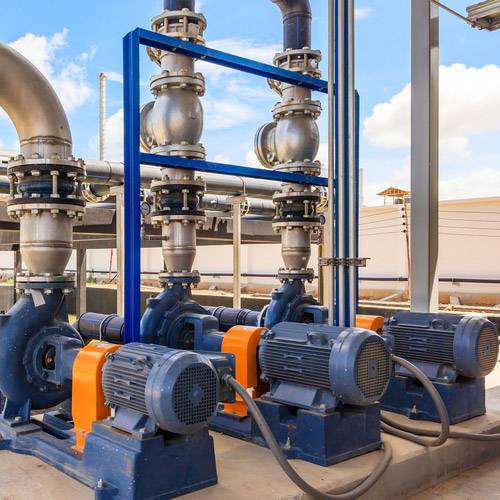

BIS Certification for Pumps in India: IS 8034 & IS 9079 Under the Pumps QCO 2023
Pumps are the quiet workhorses of India’s agriculture, water supply, and industrial sectors — moving water for irrigation, lifting it from borewells, and circulating it through countless systems. Because they are sold in enormous volumes and run for years under demanding conditions, their quality and energy efficiency matter a great deal. To raise baseline standards across the market, the government has brought several pump categories under mandatory BIS certification through the Pumps Quality Control Order. This guide covers BIS certification for pumps under IS 8034 and IS 9079.
For pump manufacturers and importers, this means the ISI mark is now a precondition for selling in India. This guide explains the Pumps QCO, the applicable Indian Standards for different pump types, how BIS certification interacts with energy-efficiency labelling, and exactly how to obtain certification.
1. Is BIS Certification Mandatory for Pumps?
Yes, for covered categories. The Ministry of Commerce & Industry introduced the Pumps (Quality Control) Order, 2023, mandating the ISI mark for notified pump types. Once a pump category is covered, it cannot be manufactured, imported, stored for sale, or sold in India without a valid BIS licence and the ISI mark. As with other QCOs, the order does not apply to pumps manufactured exclusively for export.
2. The Applicable Indian Standards
Different pump types are certified against different Indian Standards. Matching your specific pump to the correct standard is the essential first step. Key standards include:
| Standard | Pump type |
|---|---|
| IS 8034 | Submersible pumpsets |
| IS 9079 | Monoset pumps for clear, cold water (agricultural and water-supply use) |
| IS 14220 / others | Openwell submersible pumpsets and related categories |
| Applicable IS | Centrifugal jet pumps, horizontal centrifugal self-priming pumps, and other notified types |
Because the QCO covers a family of pump types, manufacturers with a broad range should map each model to its correct standard rather than assuming one certification covers the whole portfolio. The standards specify performance parameters such as head, discharge, and efficiency, along with construction and safety requirements — so the pump must be designed and tested against the precise standard that matches its type.
3. BIS Certification and BEE Energy Labelling
Pumps illustrate how more than one compliance requirement can apply to the same product. BIS certification under the QCO addresses safety and performance to the Indian Standard. Separately, India’s Bureau of Energy Efficiency (BEE) operates a star-rating programme that covers certain pump categories — notably agricultural pump-sets — requiring an energy-efficiency label. Where it applies, BEE labelling is additional to, not a substitute for, BIS certification. Manufacturers should confirm whether their specific pump falls under a BEE labelling requirement so they do not satisfy one obligation while overlooking the other. Building a simple compliance matrix — each model against BIS certification and any BEE labelling — keeps the picture clear.
4. The Certification Route: ISI Mark (Scheme-I)
Pumps are certified under the ISI mark route, Scheme-I of the BIS (Conformity Assessment) Regulations, 2018, which includes a factory inspection alongside sample testing. The broad process is:
- Determine the standard — Identify the correct Indian Standard for each pump model.
- Apply — Apply on the BIS portal with the required technical and business documents.
- Factory inspection — BIS inspects the manufacturing unit and draws sealed samples.
- Sample testing — Samples are tested at a BIS-recognised laboratory against the applicable standard.
- Grant of licence — On a successful assessment, BIS grants the licence authorising use of the ISI mark.
5. Foreign Manufacturers
Overseas pump manufacturers certify through the Foreign Manufacturers Certification Scheme (FMCS) version of the ISI route. The foreign manufacturer must appoint an Authorised Indian Representative (AIR) resident in India, and BIS inspectors audit the overseas factory — adding travel cost and lengthening the timeline. Given the scale of India’s pump market, foreign manufacturers should plan certification well ahead of their intended launch and ensure their AIR’s details are consistent across all documents.
6. Documents, Timeline, and Validity
Typical documentation includes the manufacturing licence or business registration, production-process and testing-facility details, technical specifications for each pump model, trademark or brand authorisation, and — for foreign applicants — the AIR appointment. Domestic applications with inspection-ready factories commonly take a few months; foreign applications run longer due to overseas audit scheduling. The ISI licence is granted for a defined term and is renewable, subject to continued compliance and periodic surveillance.
7. Why Pump Quality and Efficiency Matter
The push to certify pumps is about more than ticking a regulatory box. Pumps are among the largest consumers of electricity in India — agricultural pumping alone accounts for a significant share of the country’s power demand — so an inefficient pump is not just a poor product; it is a lifelong drain on energy and money. A pump that delivers less water per unit of electricity, or that fails prematurely, imposes real costs on farmers and water utilities who rely on it daily. Standards such as IS 8034 and IS 9079 set the performance and construction baseline that ensures a pump does its job reliably and efficiently over years of hard use.
For manufacturers, this dual focus on safety and efficiency is also why the BIS and BEE frameworks coexist. A genuinely good pump is both safe and efficient, and certification is the mechanism that verifies and signals both qualities to buyers — increasingly important as agricultural and municipal purchasers become more cost- and energy-conscious.
8. Common Mistakes That Delay Certification
Pump manufacturers commonly run into the same avoidable problems. Anticipating them keeps the process moving:
- Wrong standard — Mapping a pump to the wrong Indian Standard for its type — for example, treating a monoset pump and a submersible pumpset interchangeably.
- Missing BEE — Overlooking the parallel BEE star-rating requirement for agricultural pump-sets.
- Factory readiness — A factory that is not genuinely inspection-ready, with gaps in performance testing capability.
- Specification mismatches — Specifications in the technical file that do not match the tested sample’s performance.
- Late foreign filings — Foreign applicants leaving AIR appointment and audit scheduling too late.
9. Renewal, Surveillance, and Market Context
After grant, an ISI licence carries ongoing obligations: BIS conducts periodic surveillance to confirm continued conformity, and the licence must be renewed before expiry to keep the ISI mark valid. Beyond compliance mechanics, the market context rewards certification. Government tenders, large agricultural buyers, and organised dealers increasingly require the ISI mark — and, where relevant, the BEE label — before purchasing. A manufacturer with a clean, well-maintained certification record is better positioned to win institutional business and to compete in a market that is steadily moving away from uncertified, low-quality product. Treating certification as a continuing discipline rather than a one-off task is what keeps that advantage intact.
10. A Practical Checklist for Pump Manufacturers
Working through a short checklist before filing prevents the most common delays:
- Map your range — Inventory every pump model and map each to its correct Indian Standard.
- Check BEE scope — Confirm whether any models — especially agricultural pump-sets — also need the BEE star label.
- Prepare the factory — Ensure the factory’s performance-testing capability is genuinely ready for inspection.
- Check the specs — Verify that each model’s rated performance matches the technical file before samples are drawn.
- Plan the foreign route — Foreign applicants: appoint the AIR and schedule the overseas audit early.
- Plan ahead — Build in a realistic time buffer and diarise the licence renewal from day one.
11. The Direction of Travel for Pump Regulation
The Pumps QCO is best understood as one step in a steadily expanding framework rather than a final, fixed rulebook. India continues to add pump categories and update the underlying standards as technology and efficiency expectations evolve, and the parallel BEE programme is itself tightening as the country pursues its energy-saving goals. The practical implication for manufacturers and importers is that staying compliant is an ongoing exercise: a model that is correctly certified today may need re-testing against a revised standard tomorrow, and a category that is currently outside the QCO may be brought in. Suppliers who monitor notifications, keep their certification records current, and build relationships with partners who track these changes are best placed to avoid being caught out. In a market this large and this strategically important, treating compliance as a living capability — not a box ticked once — is what protects long-term access.
Frequently Asked Questions
Q. Which pumps are covered by the QCO?
The Pumps (Quality Control) Order, 2023 covers notified categories such as submersible pumpsets (IS 8034) and monoset pumps (IS 9079), along with other centrifugal pump types. Confirm whether your specific model is covered and under which standard.
Q. Do I need BEE labelling as well as BIS certification?
Possibly. Certain pumps — notably agricultural pump-sets — fall under the BEE star-rating programme, which is separate from and additional to BIS certification. Check whether your product is in scope for both.
Q. Are export-only pumps covered?
No. The order does not apply to pumps manufactured exclusively for export; it governs pumps placed on the Indian market.
How PCN India Global Can Help
Our specialists manage the full certification lifecycle — standard selection, lab-test coordination, factory-audit readiness, AIR appointment, documentation, and end-to-end filing — so your approval clears the first time. Call +91 80109 05029, email bdm@pcnindiaglobal.com, or visit pcnindiaglobal.com to get started.
Related Compliance Guides
- BIS Certification for Fire Detection & Alarm Systems
- BIS Certification for Hand-Held Motor-Operated Electric Tools
- BIS Certification for Gas Cylinder Service Valves
Related Guides
- BIS ISI Certification for Bicycles in India (IS 10613)
- BIS Certification for Hand-Held Motor-Operated Electric Tools in India
- BIS Certification for Gas Cylinder Service Valves in India
- BIS Certification for Fire Detection & Alarm Systems in India
Need expert help? See our BIS ISI mark certification services.