
BEE Star Rating Registration in India: Who Needs It, Which Products, and How to Apply
Table of Contents
- What Is BEE Star Rating Registration?
- Which Products Require Mandatory BEE Star Label?
- Voluntary BEE Star Label Products
- How the BEE Star Rating System Works
- BEE Mandatory vs. Voluntary: Key Differences
- Step-by-Step BEE Registration Process
- Documents Required for BEE Star Label Registration
- BEE Timeline and Validity
- BEE Penalties for Non-Compliance
- Frequently Asked Questions
- Conclusion
Introduction
Walk into any electronics or appliance store in India and you will see a distinctive yellow and green label with gold stars on refrigerators, air conditioners, fans, and washing machines. That is the BEE Star Label — and for an expanding list of products, it is no longer optional. This guide explains BEE star rating registration in India: which products need it, the process and timelines.
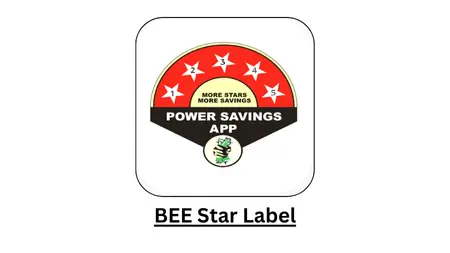
The Bureau of Energy Efficiency (BEE), operating under the Ministry of Power, Government of India, administers the Star Label Programme. It grades products from 1 star (least efficient) to 5 stars (most efficient) based on energy consumption testing. For mandatory products, no appliance can be manufactured or imported for Indian retail without a valid BEE registration and star rating.
If you manufacture, import, or sell electrical appliances in India, this guide will tell you exactly what the BEE Star Label Programme requires of you, which products are mandatory, and how to get registered.
What Is BEE Star Rating Registration?
The BEE Star Label Programme is India’s product energy efficiency labelling system. It is established under the Energy Conservation Act, 2001 (amended 2022) and implemented by the Bureau of Energy Efficiency (BEE).
The programme has two tracks:
- Mandatory Star Labelling: Products listed as mandatory cannot be manufactured or sold in India without a BEE star label. The label is a legal requirement — not a marketing choice.
- Voluntary Star Labelling: Manufacturers and importers can voluntarily apply for star labelling on products not yet covered under mandatory notification. This provides a competitive marketing advantage.
BEE registration involves:
- Testing the product’s energy efficiency at a BEE-empanelled test laboratory
- Applying to BEE with test results and product specifications
- BEE assigning a star rating (1–5 stars) based on the product’s Energy Efficiency Ratio (EER), Annual Energy Consumption (AEC), or applicable metric
- Displaying the approved BEE star label on every unit
Which Products Require Mandatory BEE Star Label?
As of 2025, the following product categories are under mandatory BEE star labelling:
| Product | Standard / Rating Metric |
|---|---|
| Room Air Conditioners (Split and Window) | ISEER (Indian Seasonal Energy Efficiency Ratio) |
| Refrigerators (Direct Cool and Frost Free) | Annual Energy Consumption (AEC) |
| Washing Machines (Semi-automatic and Fully automatic) | Energy per wash cycle |
| Ceiling Fans | Stars per watt consumed |
| LED Lamps and Luminaires | Luminous efficacy (lm/W) |
| Distribution Transformers | Energy efficiency percentage |
| Electric Motors | Energy Efficiency Index (EEI) |
| Television Sets (LED/LCD) | Annual Energy Consumption |
| Geysers (Storage Water Heaters) | Energy Factor (EF) |
| Pumping Sets (Agricultural) | Wire-to-water efficiency |
| Computers and Laptops | Annual Energy Consumption |
New product categories are added periodically. Always verify the current mandatory list on the BEE portal.
Voluntary BEE Star Label Products
Manufacturers and importers of the following products can voluntarily register for BEE star labelling, even though it is not yet mandatory:
- Microwave ovens
- Induction cooktops
- Solar water heaters
- Office equipment (printers, photocopiers)
- Deep freezers
- Commercial refrigeration equipment
Voluntary registration strengthens market positioning, particularly for premium brands competing on energy efficiency claims.
How the BEE Star Rating System Works
BEE assigns star ratings based on energy performance metrics specific to each product category. The system uses a schedule (updated periodically) that maps the product’s measured efficiency to a star band.
Example: Room Air Conditioners
BEE uses the ISEER (Indian Seasonal Energy Efficiency Ratio) for ACs. ISEER accounts for the full cooling season in Indian climate conditions.
| Star Rating | ISEER Range (Split AC, cooling-only, 2025 schedule) |
|---|---|
| 1 Star | 3.30 – 3.49 |
| 2 Stars | 3.50 – 3.99 |
| 3 Stars | 4.00 – 4.49 |
| 4 Stars | 4.50 – 4.99 |
| 5 Stars | 5.00 and above |
Schedules are periodically revised upward, meaning a product rated 5-star today may need to improve efficiency to maintain its rating in the next rating cycle.
Why Schedules Change
BEE gradually tightens efficiency thresholds every 2–3 years. This pushes manufacturers to continuously improve product efficiency. Products with ratings registered under an expired schedule must be re-tested and re-registered under the current schedule.
BEE Mandatory vs. Voluntary: Key Differences
| Aspect | Mandatory Star Labelling | Voluntary Star Labelling |
|---|---|---|
| Legal status | Compulsory – cannot sell without it | Optional – market advantage only |
| Product coverage | Notified appliances (ACs, fridges, fans, etc.) | Products not yet notified |
| Penalty for non-compliance | Fines, recall, market ban | None – voluntary |
| Primary benefit | Legal market access | Competitive differentiation |

Step-by-Step BEE Registration Process
Step 1: Identify Mandatory vs. Voluntary Status
Confirm whether your product is under mandatory or voluntary star labelling by checking the BEE portal.
Step 2: Identify the Applicable Test Standard
Each product category has a specific Indian Standard (IS) or BEE test method for energy measurement. Identify the correct one for your product.
Step 3: Select a BEE-Empanelled Test Laboratory
BEE publishes a list of empanelled laboratories (NABL-accredited) for each product category. Submit your product samples for testing.
Step 4: Conduct Energy Efficiency Testing
The laboratory tests the product per the applicable BEE test standard. Results include the key efficiency metric (ISEER, AEC, EER, etc.) and power consumption measurements.
Step 5: Apply on the BEE Portal
Register and file your application on the BEE portal. Upload:
- Test reports from the empanelled lab
- Product technical specifications
- Company documents
- Authorisation letter (for importers/agents)
Step 6: BEE Reviews and Assigns Star Rating
BEE verifies the test reports and determines the applicable star rating per the current schedule. A BEE Registration Number and approved star rating are assigned.
Step 7: Display the BEE Star Label
Print and display the BEE star label (with the assigned rating, registration number, and product details) on every unit manufactured or imported.
Step 8: Annual Renewal
BEE registrations must be renewed annually. Product models must continue to be tested if the rating schedule changes.
Documents Required for BEE Star Label Registration
| Document | Details |
|---|---|
| Company registration / incorporation certificate | For legal entity verification |
| GST and PAN details | Mandatory |
| Product technical specifications | Model number, rated capacity, power input details |
| BEE-empanelled lab test report | Covering all mandatory test parameters |
| Declaration of conformity | Self-declaration of product compliance |
| Brand authorisation (if filing as importer/agent) | Foreign brand authorisation letter |
| IEC Code | For importers |
BEE Timeline and Validity
Processing Timeline
| Stage | Duration |
|---|---|
| Product testing at lab | 2–6 weeks |
| BEE portal filing and document preparation | 1 week |
| BEE review and registration | 2–4 weeks |
| Total | 5–11 weeks |
Validity
- BEE star label registrations are typically valid for 1–2 years, depending on whether the product schedule is due for revision.
- Products must be re-registered when BEE updates the rating schedule for their category.
BEE Penalties for Non-Compliance
Under the Energy Conservation Act, 2001 (as amended), penalties for non-compliance with mandatory BEE star labelling include:
- First offence: Fine up to INR 10 lakh
- Subsequent offences: Fine up to INR 10 lakh per day of continued non-compliance
- Misrepresentation of star rating: Product recall, market ban, and legal proceedings
BEE conducts regular market surveillance — sampling products from retail stores and e-commerce platforms and sending them to labs for verification of claimed star ratings.
Frequently Asked Questions
Does BEE registration apply to importers or only manufacturers?
Both manufacturers and importers must register. If you are importing a BEE-mandatory product, you (or your supplier) must hold a valid BEE registration. The label must be on the product when it enters India.
My product has Energy Star certification from the USA. Does that count for BEE?
No. US Energy Star and India’s BEE Star Label are separate programmes with different test standards and rating systems. You must register with BEE independently using India-specific testing.
Can I sell a 1-star BEE product in India?
For mandatory products, the minimum star rating varies by product category. Some categories require a minimum rating (e.g., 2 stars or 3 stars) for market sale. A product that only achieves 1 star may not be legally saleable in India for certain categories. Check the current mandatory schedule on the BEE portal.
What if my product’s efficiency falls below the minimum threshold after BEE revises the schedule?
If your product’s efficiency does not meet the new minimum threshold in a revised schedule, you cannot continue to sell or import that model. You must either improve the product’s efficiency, re-test, and obtain a new registration, or discontinue that model.
Does BEE star labelling apply to products sold only to commercial/industrial buyers?
Mandatory BEE star labelling generally applies to products sold in retail consumer channels. Industrial equipment (like large distribution transformers, electric motors) also has mandatory requirements, but through a different BEE framework. Consult a specialist for your specific product application.
Conclusion
BEE star rating registration is mandatory for an expanding list of electrical appliances and equipment sold in India. Whether you manufacture locally or import from abroad, the BEE star label is not a competitive differentiator for mandatory products — it is a legal prerequisite.
The programme also pushes product quality upward: consumers are increasingly educated about energy efficiency, and high BEE star ratings are a significant purchase driver in the Indian market, particularly for air conditioners and refrigerators. Getting registered not only keeps you legal — it gives you a commercial advantage in a quality-conscious market.
Need Help With BEE Star Rating Registration?
PCN Global India Corporation provides end-to-end BEE star label registration for manufacturers and importers, from laboratory coordination and portal filing to renewal management.
We also handle: BIS Certification | BIS CRS | EPR Registration | WPC ETA | TEC/MTCTE | LMPC | DGFT Licensing
Get in touch: Website: https://pcnindiaglobal.com | Email: bdm@pcnindiaglobal.com | Phone: +91 80109 05029
Related Compliance Guides
- BEE Star Rating & Registration for Solid State Inverters
- BEE Star Rating & Registration for Diesel Generator Sets
- BEE Star Rating & Registration for Solar Water Heaters
Related Guides
- BEE Star Rating & Registration for Solid State Inverters in India
- Complete Guide to Indian Product Certifications
- BEE Star Rating & Registration for Diesel Generator Sets in India
- BEE Star Rating & Registration for Room Air Conditioners in India
Need expert help? See our BEE registration services.