

TEC MTCTE, BIS CRS & Security Testing for CCTV Cameras in India: 2026 Compliance Guide
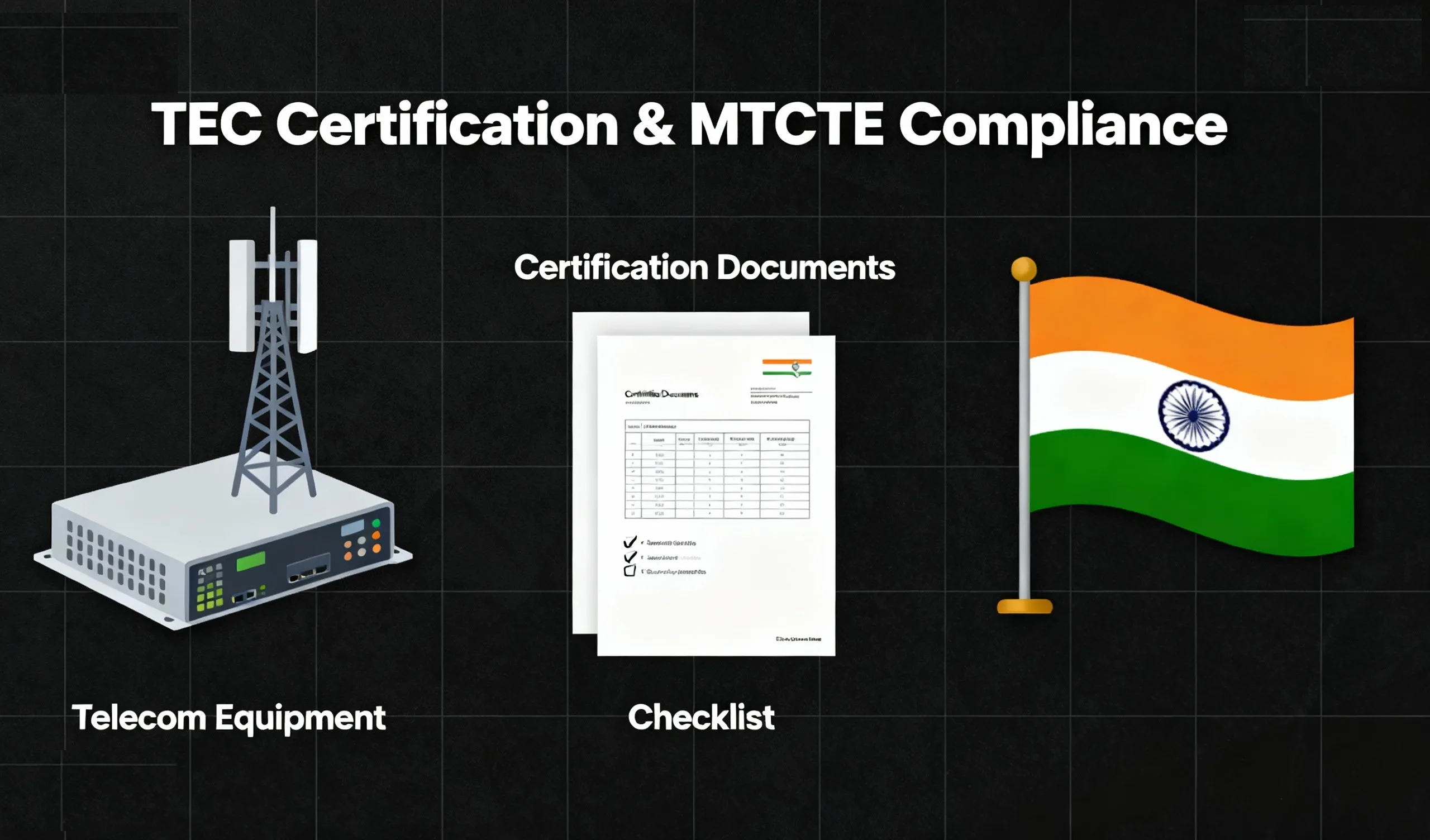
Importers, system integrators and brand owners of CCTV cameras often ask whether they need TEC MTCTE approval. The short answer for 2026: CCTV cameras and recorders are regulated mainly through BIS CRS registration and the Essential Requirements for Security of CCTV notified by MeitY, while MTCTE applies to the network and telecom equipment around them — routers, switches and Wi-Fi access points. Wireless cameras also need WPC ETA. This guide explains which approval applies to which product, so you do not pay for the wrong certification or get stopped at customs.
1. What Is MTCTE?
MTCTE — Mandatory Testing and Certification of Telecommunication Equipment — is run by the Telecommunication Engineering Centre (TEC) under the Department of Telecommunications. Since 2019, equipment notified under MTCTE must be tested against TEC Essential Requirements in a designated lab and certified before it can be sold, imported or used in India.
Products have been added in phases (Phases I to VI so far). Notified products include routers, switches, Wi-Fi access points, IP phones, IoT gateways, cellular base stations, optical fibre equipment, 5G equipment and, from August 2025, Phase VI items such as network security appliances and cellular customer premises equipment. The procedure document TEC 93009:2024 (version 3.0) extended the validity of regular MTCTE certificates from 5 to 10 years.
CCTV cameras, NVRs and DVRs are not listed as separate product categories in the MTCTE phases notified so far. Always check the current TEC product list for your exact model, as new phases are added.
2. Which Approval Applies to Which Surveillance Product?
| Product | Main Mandatory Approval(s) |
|---|---|
| IP / network CCTV cameras | BIS CRS under IS 13252 (Part 1) plus the Essential Requirements for Security of CCTV (applicable to non-analog cameras from 9 April 2025) |
| Analog CCTV cameras | BIS CRS under IS 13252 (Part 1); MeitY clarified in March 2025 that the security requirements do not apply to analog cameras |
| CCTV recorders (NVR / DVR) | BIS CRS under IS 13252 (Part 1); check whether the security requirements apply to your model |
| Wi-Fi / 4G / wireless cameras | All of the above plus WPC ETA for the radio module |
| PoE switches, routers, Wi-Fi access points used in the system | TEC MTCTE, plus BIS CRS where notified |
| Cameras for government and critical projects | Above approvals plus any tender-specific requirements, such as STQC testing |
3. Why Security Testing Now Matters for CCTV
Network-connected cameras can be accessed remotely, so India added security requirements for CCTV under the BIS CRS framework. Non-analog cameras must now show compliance with requirements covering areas such as secure communication, access control, data protection and firmware integrity. For models already registered, manufacturers had to submit the security test reports or a self-declaration for analog models through the BIS portal by the April 2025 deadline, or risk losing those models from their registration.
For importers this means a CRS registration alone is no longer enough for an IP camera: the model must also be covered by the security requirements.
4. Documents Usually Required
For BIS CRS and security testing (cameras and recorders)
- Manufacturer business licence and factory details
- Model list, marking each model as analog or non-analog
- Technical specifications, user manual and critical-component list
- IS 13252 (Part 1) test report from a BIS-recognised lab
- Security (ER) test report for non-analog models
- Authorised Indian Representative (AIR) nomination for foreign manufacturers
For TEC MTCTE (network equipment)
- Test reports against the applicable TEC Essential Requirement from a designated lab
- Product documentation and model details
- Applicant company documents (Indian entity or authorised representative)
5. Step-by-Step Approach
- List every SKU — cameras, recorders, switches, routers and wireless modules
- Map each SKU to its approval: BIS CRS, security ER, WPC ETA or MTCTE
- Group camera models into series where BIS rules allow, to reduce testing
- Test in BIS-recognised and TEC-designated labs as applicable
- File BIS CRS applications on the BIS portal, and MTCTE applications on the MTCTE portal (mtcte.tec.gov.in)
- Obtain WPC ETA for wireless products
- Keep certificates and R-numbers ready for customs and marketplaces
6. Timeline and Key Considerations
| Stage | Typical Duration |
|---|---|
| BIS CRS + security testing (per series) | 4 – 8 weeks of lab time, plus BIS processing |
| TEC MTCTE (network equipment) | 4 – 8 weeks of lab time, plus TEC review |
| WPC ETA | 2 – 4 weeks after RF test reports |
| Overall for a new CCTV range | About 2 – 4 months if planned in parallel |
Firmware changes that affect security functions can require re-testing, so freeze firmware before testing. Analog and non-analog models cannot be mixed in the same BIS application.
7. What Happens to Non-Compliant Shipments?
- Customs can hold goods that need BIS CRS but lack a valid registration for the model
- Registered non-analog models without security compliance can be removed from the registration
- Marketplaces can delist non-compliant listings
- Government and critical-infrastructure buyers can reject non-compliant equipment
Need Expert Assistance? Contact PCN India Global
India’s regulatory compliance landscape is complex, multi-agency, and constantly evolving. Missing a certification, filing deadline, or document requirement can result in customs holds, product seizures, and significant financial loss. PCN India Global provides complete end-to-end support — from first-mile regulatory mapping through to certificate issuance, with experienced consultants managing every government touchpoint on your behalf.
We specialise in:
- BIS CRS and security (ER) testing for CCTV cameras, NVRs and DVRs
- TEC MTCTE for routers, switches, modems, and telecom equipment
- WPC ETA for wireless CCTV and IoT surveillance devices
- BIS CRS Registration for electronic surveillance products
- Complete import compliance audit for security/surveillance product importers (STQC certification included where required)
📞 Phone: 08010905029 | ✉ Email: bdm@pcnindiaglobal.com | 🌐 pcnindiaglobal.com
Your first compliance consultation is free. Reach out today.
Frequently Asked Questions
Do CCTV cameras need TEC MTCTE approval?
CCTV cameras, NVRs and DVRs are not listed as separate product categories in the MTCTE phases notified so far. Their main mandatory route is BIS CRS registration under IS 13252 (Part 1), plus the Essential Requirements for Security of CCTV for non-analog models. Network equipment used with them, such as routers, switches and Wi-Fi access points, does need MTCTE. Check the current TEC list for your exact product.
Do analog CCTV cameras need security testing?
No. MeitY clarified in March 2025 that the security requirements do not apply to analog CCTV cameras. They still need BIS CRS registration under IS 13252 (Part 1), and the test report must state that the model is analog.
My supplier already has BIS registration — can I import?
Only if the registration covers the exact model you import, in the manufacturer’s name, and — for IP cameras — the model is also covered by the security requirements. Check the R-number and model list on the BIS portal.
Do wireless CCTV cameras need anything else?
Yes. Cameras with Wi-Fi, Bluetooth or cellular modules also need WPC Equipment Type Approval for the radio.
How long is a TEC MTCTE certificate valid?
Under the TEC 93009:2024 procedure (version 3.0), regular MTCTE certificates are valid for 10 years, up from 5 years earlier.
Can PCN help with a full CCTV range?
Yes. We map each camera, recorder and network product to the right approvals and run BIS CRS, security testing, WPC and MTCTE applications in parallel.
Related Compliance Guides
- Solar Panel Compliance
- BIS QCO Deadlines 2026: New Mandatory Certifications Importers Can’t Ignore
- What Is a Quality Control Order (QCO)
Related Guides
- BIS ISI Certification for Gypsum Based Building Materials in India
- BIS ISI Certification for Laboratory Glassware in India
- BIS ISI Certification for Electrical Accessories in India
Need expert help? See our TEC MTCTE approval services.