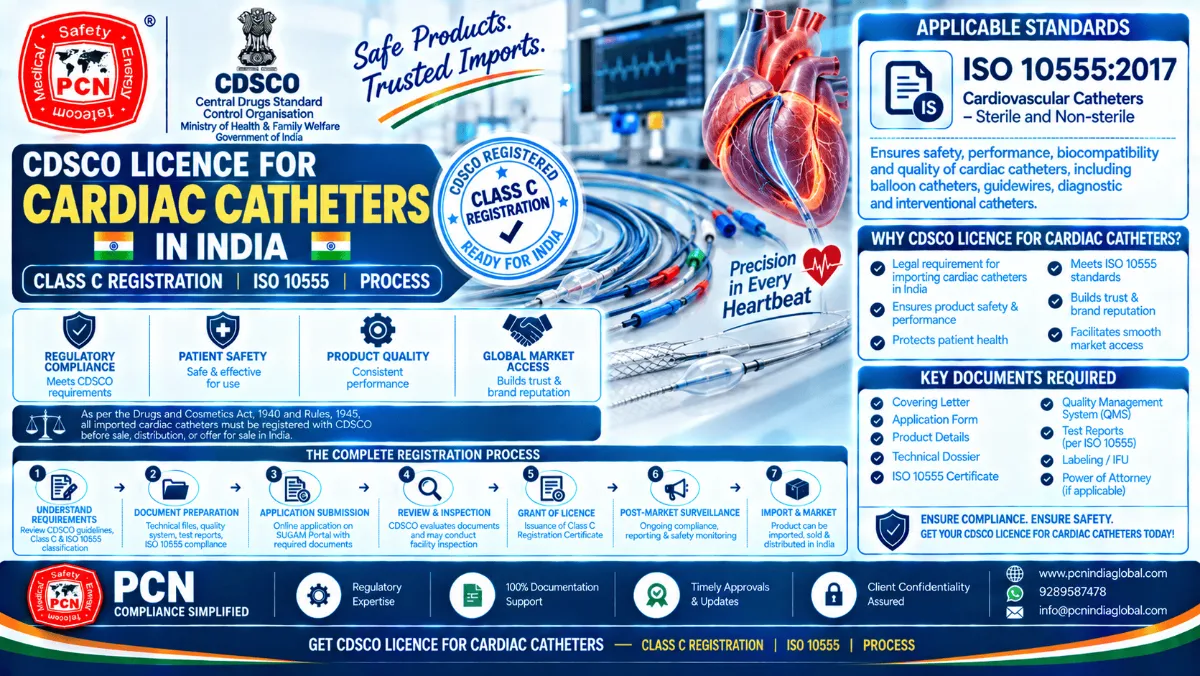
A cardiac catheter is threaded through the vascular system into the heart to diagnose or treat coronary and structural disease — angiography, angioplasty, electrophysiology and beyond. Because it enters the central circulatory system, CDSCO regulates the cardiac catheter as a Class C device (with specialised ablation and structural-heart catheters reaching the higher end). This guide
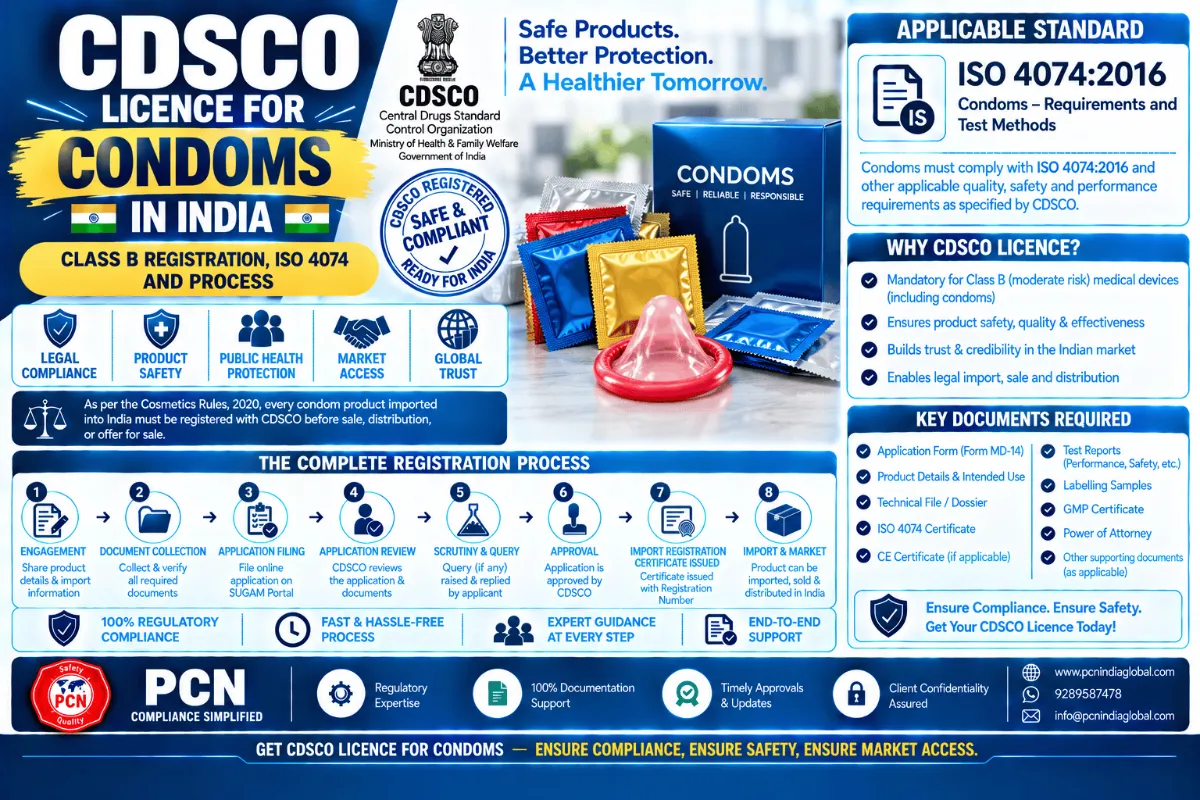
A condom is a barrier contraceptive that also prevents the transmission of infection, so its integrity is a genuine public-health matter. CDSCO regulates the male latex condom as a Class B medical device with a defined burst-volume, leakage and freedom-from-holes test regime and validated manufacturing behind the licence. This guide covers the full CDSCO registration
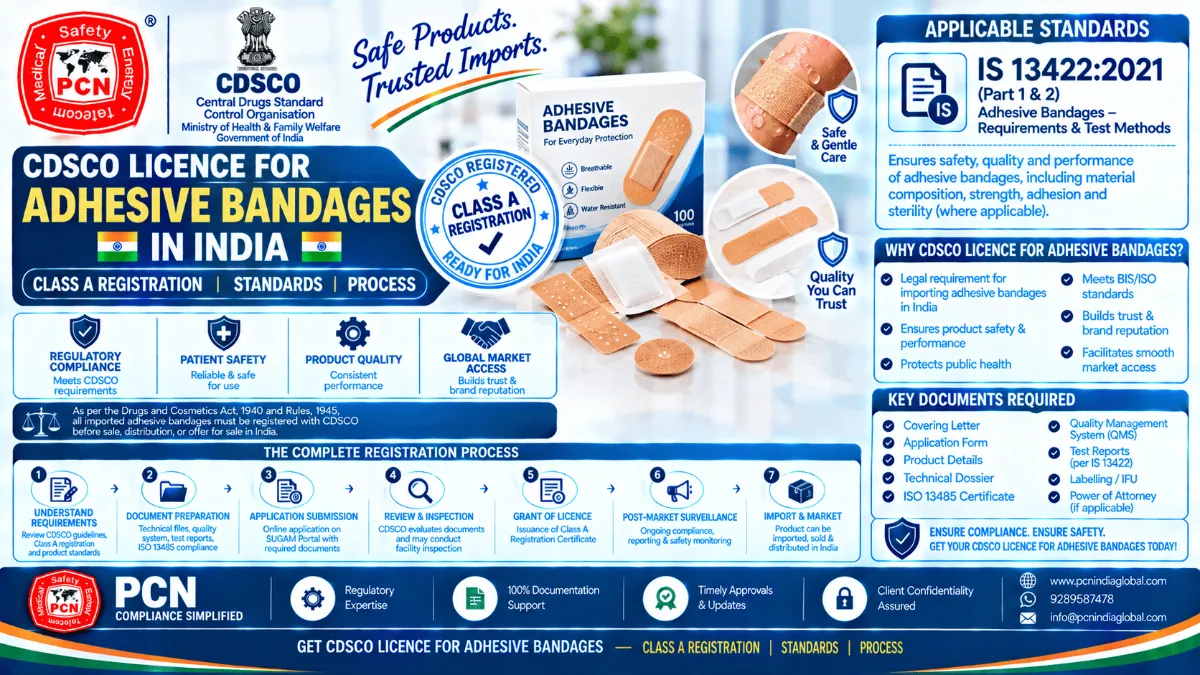
An adhesive bandage (plaster) covers and protects a minor wound with an absorbent pad on a skin-adhesive backing — the most everyday medical device there is. Simple as it is, it contacts broken skin and is a regulated product, and CDSCO treats the adhesive bandage as a Class A device with skin-biocompatibility and basic performance
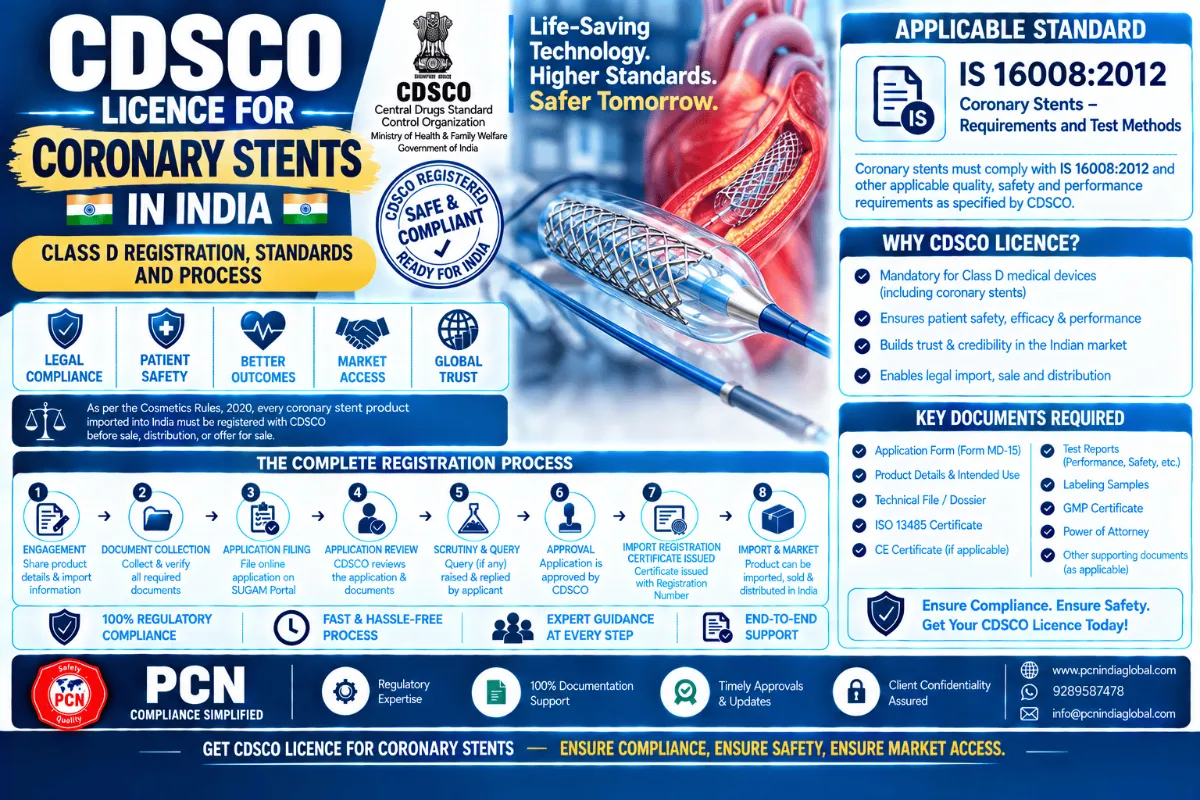
Coronary stents sit at the very top of India’s medical-device risk pyramid. As a permanent, life-sustaining implant placed in the coronary arteries, a stent that fails does not cause an inconvenience — it causes a cardiac event. That is exactly why the Central Drugs Standard Control Organisation (CDSCO) treats coronary stents as a Class D
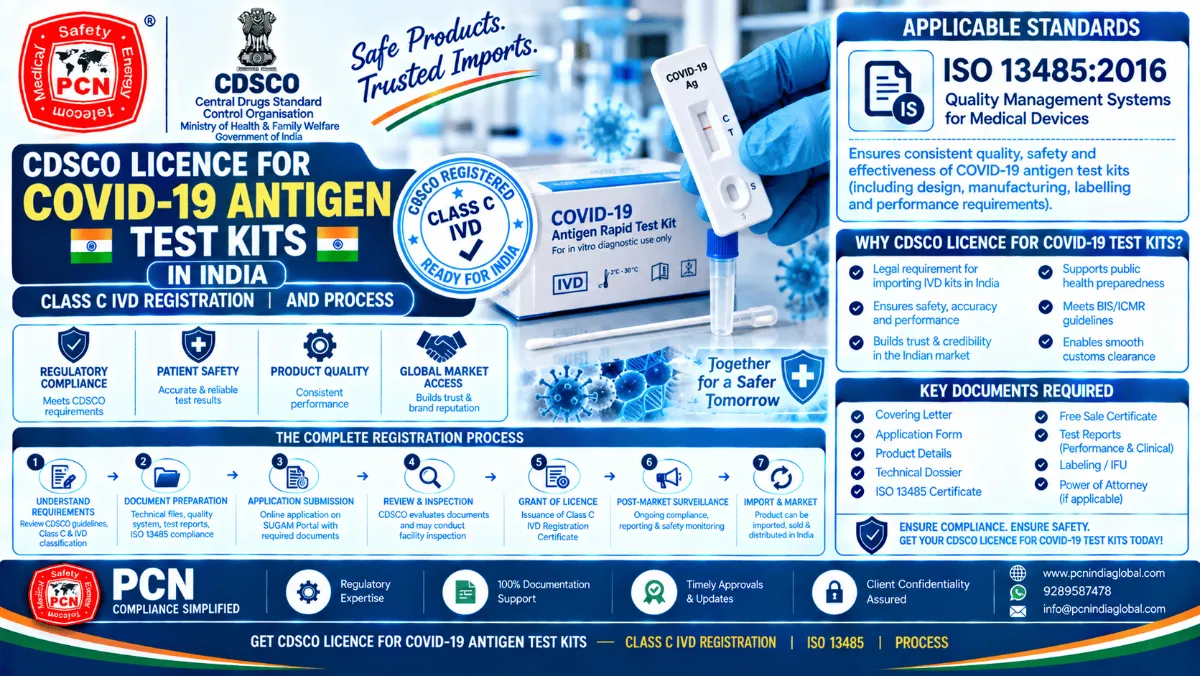
CDSCO licence for COVID-19 antigen test kits in India — Class C IVD, Form MD-9/MD-15, performance evaluation, sensitivity/specificity, fees and timeline.
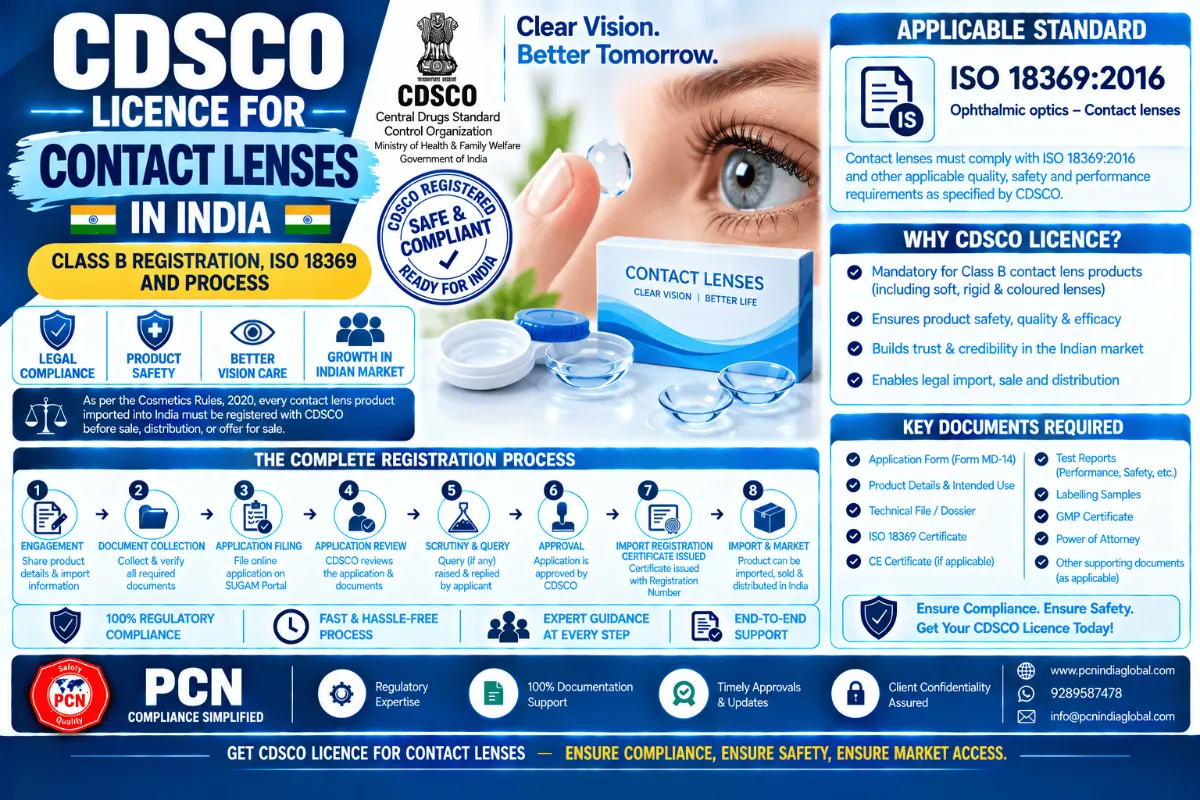
A contact lens sits directly on the eye’s surface, correcting vision or changing appearance — and even a plano coloured lens is a medical device because of where it goes. CDSCO regulates contact lenses as a Class B device with the ophthalmic-optics contact-lens standard series and biocompatibility behind the licence. This guide covers the full
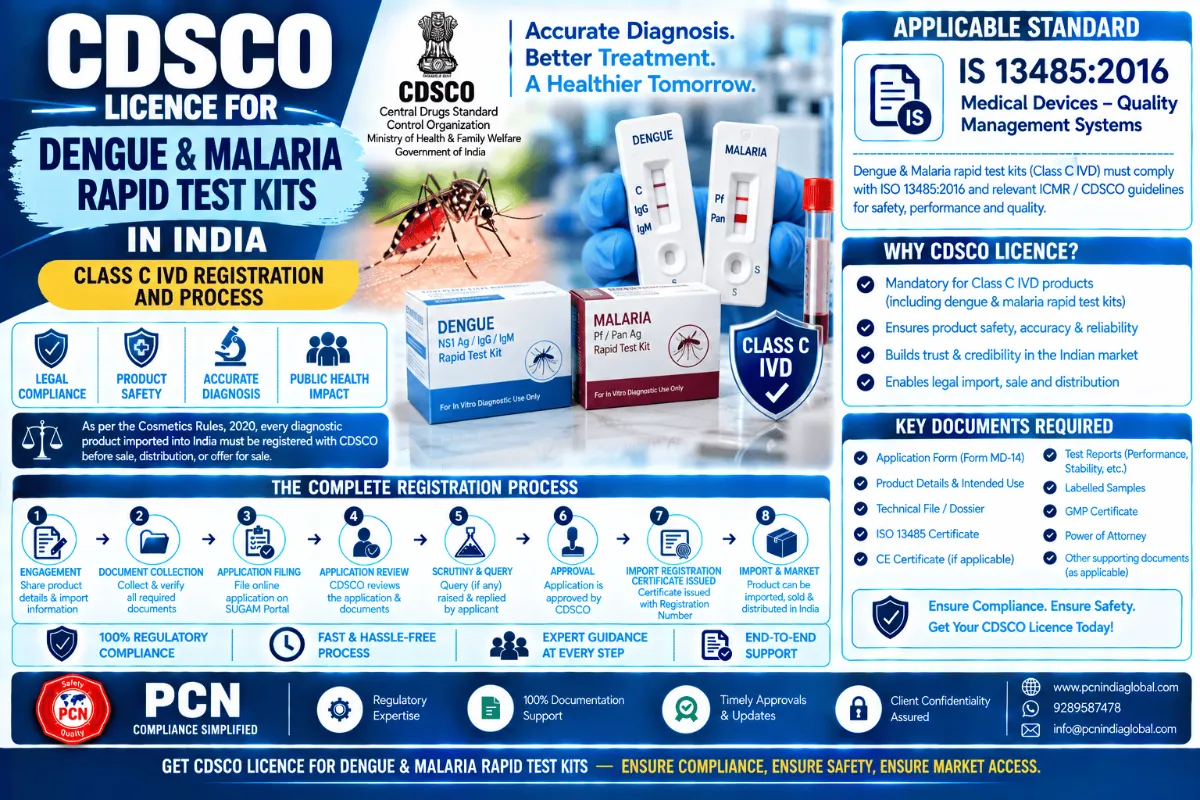
Dengue and malaria rapid test kits detect vector-borne infections that are seasonal and widespread across India, and a wrong result delays urgent treatment. Because they detect infectious agents, CDSCO regulates these rapid kits as Class C in-vitro diagnostics (IVDs), with validated performance-evaluation evidence behind the licence. This guide covers the full CDSCO registration pathway for
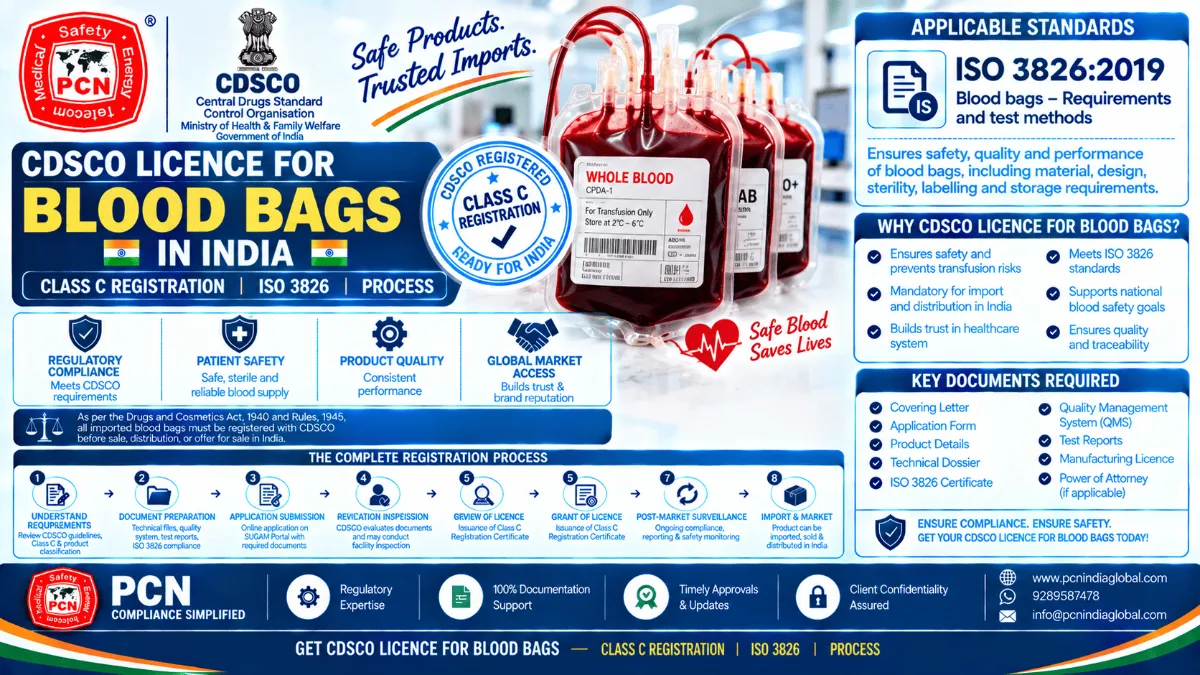
A blood bag collects, stores and transfuses blood and its components, with an anticoagulant/preservative solution that keeps the blood viable. Because it is a sterile, blood-contacting device central to transfusion safety, CDSCO regulates the blood bag as a Class C device with the blood-bag standard, the anticoagulant solution and sterility behind the licence. This guide
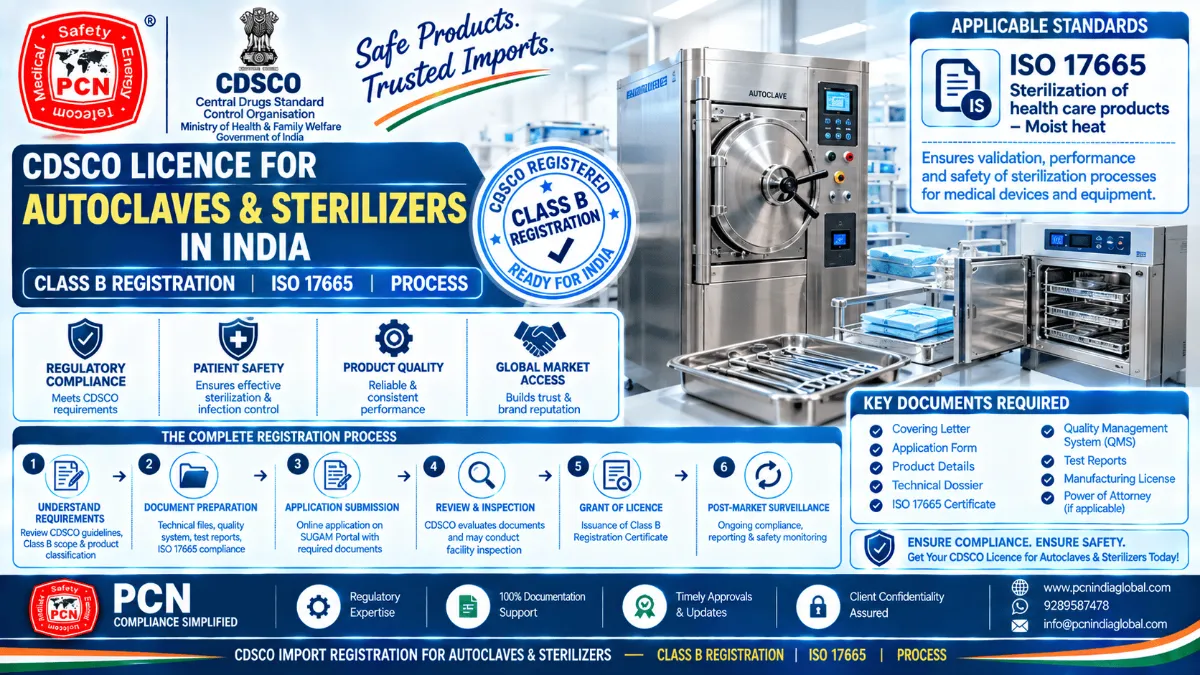
A steam sterilizer (autoclave) makes reusable instruments safe to use again, so its cycle performance underpins infection control across every hospital and clinic. CDSCO regulates the medical sterilizer as a Class B device with the moist-heat sterilization standards and cycle validation behind the licence. This guide covers the full CDSCO pathway for autoclaves and sterilizers